What is Faith?

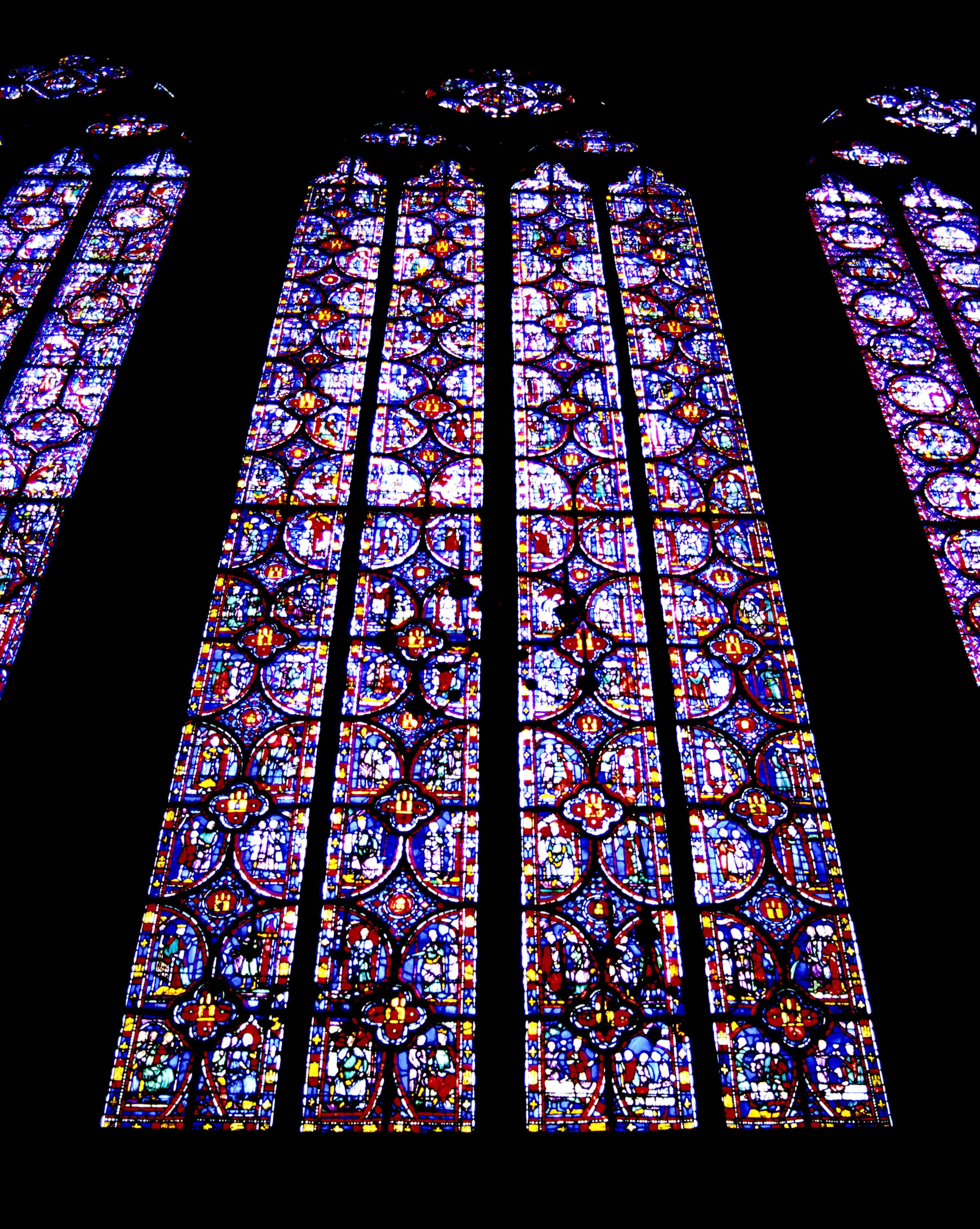
13th Century Stained Glass, Sainte-Chapelle Church, Paris, France Copyright 2000 by Blair Atherton

13th Century Stained Glass, Sainte-Chapelle Church, Paris, France Copyright 2000 by Blair Atherton

As I understand it, faith is the certainty in one’s belief in some thing or someone. Of course in the context of spirituality, faith usually refers to one’s certainty in the existence of a higher being, Universal Energy, or Creator.

When we say we have faith in a person, we are letting them know that we trust them or have trust in them—trust in their abilities, trust that they will not do anything to hurt us, trust that they will be there when we need their help or support.

It could be said that our faith in God has these same attributes and expectations. However, our faith in God is intuitive and comes from spiritual awareness, whereas our faith in a person is experiential and based on concrete knowledge of their past behaviors. Consequently, faith in a higher being is a leap that some are unwilling to take.

Another form of faith refers to trust in a religious doctrine and what are believed to be God’s promises and teachings found in religious scriptures. I believe that one should be cautious here and not let this type of faith to be blind. The scriptures and the clergy should not go unchallenged.

Scriptures from the various religions provide a lot of wonderful guidance concerning how to live a spiritual life of goodness. I think that most of us would independently agree on which passages provide such spiritual wisdom.

However, skepticism about other passages is healthy and may provide deeper insight. We would be remiss if we blindly accepted everything in the scriptures as the word of God. We were given the ability to reason and, if we apply it, we will be able to distinguish the word of God from those of men.

Related articles

Faith and Spiritual Awareness

What is Spiritual Awareness?

Faith and Spiritual Awareness

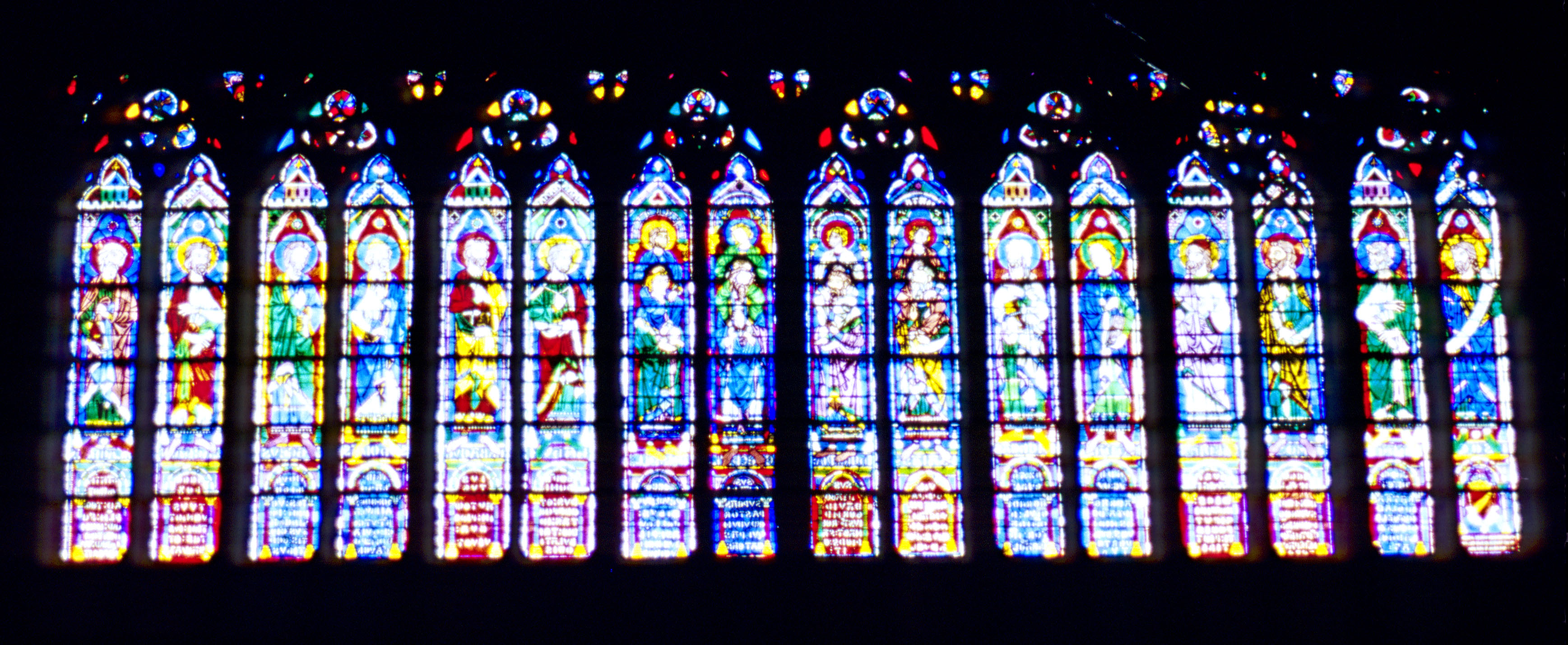
The Sixteen Prophets, Notre Dame Cathedral, Paris, France. Copyright 2000 by Blair Atherton

The Sixteen Prophets, Notre Dame Cathedral, Paris, France. Copyright 2000 by Blair Atherton

Are faith and spiritual awareness the same thing? This is an interesting question and no doubt there are many different views concerning the answer.

In thinking about this in the context of my own religious and spiritual experiences, I am of the belief that they are not the same. I see faith as a doorway or threshold through which most people must pass in order to begin a path to spiritual awareness. There are exceptions to this, but for most of us faith in a higher being is a necessary first step.

At the same time, simply believing in God is not sufficient for becoming spiritually aware. If we think about it, we realize that we know many people who participate in the rituals of organized religion but show no signs of spiritual awareness. When they walk out the door of their place of worship they leave God behind and return to their often self-centered and materialistic lifestyle. This can also apply to those who believe in God, but do not participate in organized religion.

In contrast, those with spiritual awareness see the world very differently. They see God in everything around them. They feel his presence every minute of every day. They constantly give Him thanks and praise, and they make a very conscious effort to live a life of goodness. They hold themselves accountable for their mistakes, wrong-doing, and transgressions, and they have genuine repentance.

Living a spiritually aware life may be a paradigm shift for many. Nevertheless, once having found the doorway to a spiritual life, do not be afraid to pass through. Keep an open mind and be prepared to make sacrifices and take on new responsibilities inherent in the knowledge you will receive.

“All that is composed shall be decomposed.”

Omega Swan Nebula, Credit: NASA, ESA and J. Hester (ASU)

Omega Swan Nebula, Credit: NASA, ESA and J. Hester (ASU)

In the traditional or canonical gospels found in the New Testament of the Bible, Jesus or Yeshua, his Aramaic name, gives us a wonderful way of looking at spirituality and how to live a truly spiritual life. There are other records of the teachings of Yeshua that were excluded from the Bible. They are referred to collectively as the Gnostic gospels. I found three: The Gospel of Phillip, The Gospel of Thomas, and the Gospel of Mary Magdalene.

After reading all three, the first thing that struck me was that they were almost completely devoid of stories about miracles. Instead they were composed of what we might call the wisdom or sayings of Yeshua. I saw nothing heretical about them; rather, they provided additional teachings to compliment those in the Bible. The three gospels provided a great deal of food for thought concerning spirituality.

None more so than the Gospel of Mary Magdalene. It was frustrating to learn that ten of the pages are missing. Frustrating because the missing pages are adjacent to what I feel are some of the most mysterious passages. What happened to the missing pages? Were they removed by someone to withhold certain secrets of spirituality, or simply damaged or lost? What do we not know in their absence?

The first ten lines from the Gospel of Mary Magdalene that follow had an especially powerful effect on me. The six pages that preceded these passages are missing from the documents that were found.

[…] “What is matter?
Will it last forever?”
The Teacher answered:
“All that is born, all that is created,
all the elements of nature
are interwoven and united with each other.
All that is composed shall be decomposed;
everything returns to its roots;
matter returns to the origins of matter.
Those who have ears, let them hear.”

The basic ideas in these passages are not new to me, but my reaction to them was totally unexpected. When I read these lines in the gospel, it felt like primal memories buried deep in my soul came crashing forward revealing a fundamental, profound truth. The feelings were so powerful that I felt a little disoriented and confused by the effect they had on me.

These passages spoke to me on a very deep level. The words were both mysterious and wonderful. All of creation is interwoven and united—YES! All that is composed shall be decomposed—that is, all that is physical is transitory. Everything shall return to the Source.

We are drawn to the Source. It is a force of nature that transcends belief. It is that inexplicable yearning for meaning and purpose unique to the human condition. It is the search for our spirit-self and its birthplace.

Shall the Meek Inherit the Earth?

Abstract Art Found in the Orion Nebula, Credit: NASA, ESA, and The Hubble Heritage Team (STScIAURA)

Abstract Art Found in the Orion Nebula, Credit: NASA, ESA, and The Hubble Heritage Team (STScIAURA)

Those of you with Christian backgrounds may recall the Beatitudes presented by Jesus during his Sermon on the Mount. They are all wonderful sayings by which to live a spiritual life.

One of my favorites is “Blessed are the meek for they shall inherit the earth.” This beatitude has been interpreted from the original Greek in a number of slightly different ways. For example, “earth” has also been interpreted to mean the Kingdom of Heaven which gives the beatitude a decidedly spiritual meaning. Alternate translations of the word “meek” include humble, gentle, and poor.

This beatitude could be interpreted as a prophesy of things to come, or simply as a statement of the most desirable sort of spiritual (and human) disposition. I favor the latter possibility. Although, I suppose, it is possible that all of the power hungry egotists could end up wiping each other out, leaving us “meek,” but not weak, spiritual people to transform humanity and save the earth.

I see meek or humble people as having great strength, self confidence, and restraint. They have a certainty that they are on the right path regardless of what others may think. Humble people understand that any talents they may have are gifts from God, and as such, credit should be given to Him whenever they are applied with good effect.

I believe that we should add humility and gentleness to our list of characteristics that describe spiritual persons. Who would be better than the “meek” to make the Kingdom of Heaven a reality on earth?

A Word About Religion

I have chosen this topic for my first blog because spirituality is, for most people, closely tied with religion. As this entry tries to illustrate, this need not be so. The following is an excerpt from my book (see the Books page in the header above) presented here verbatim.

The Virtues of Quiet Devotion and the Prehistoric Mind

All of the experiences described in this book and more have helped to shape my views of religion. The basic concepts and implications that surround a belief in a creator, God, or some higher being are very simple and inherent in the simple plan outlined in the next chapter.

Man has taken these basic concepts and created dogmatic and rigid religious institutions that do not serve God or man well. While we may call for freedom of religion, we overlook the fact that there is often little freedom allowed within organized religion. Too many people blindly follow the attitudes and edicts of their religion and religious leaders without first applying their God-given reason.

We commonly associate the worship of God with organized religion. However, there are many ways to worship God within a religious dogma, as well as external to organized religion all together. I am in favor of a quiet devotion to God without the limitations and distractions of rituals, and traditions.

I believe that quiet devotion to God can be the deepest, truest, and most profound kind of relationship you can have with Him. I believe this to be so, in part because you are not seeking any sort of recognition from your fellow man. It is a pure and intimate relationship with God, unfettered by appearances and rituals.

There are many out there who share this concept of quiet, unpretentious worship. But their devotion to God is unseen by others except perhaps through their compassionate, gentle, and caring ways. I share what follows with you to illustrate that there are other ways to worship God than through the rituals and traditions of organized religion.

At the same time, many religious teachings have great value by providing a moral code for how we should live our lives. It is the narrow-mindedness and fanaticism of some “religious” people that I find objectionable.

Many of us have been indoctrinated by our religion leading us to believe it is the only (right) way to show devotion to God. There are myriad ways to give homage to God, and not all involve affiliation with a particular religion. It is not for us to say which practice is better than another. A person’s relationship with God is a very personal one, and should not be subject to scrutiny or criticism by others.

At the same time, one should not try to impose their religious beliefs and attitudes on others. To attempt to do so, in effect, is a dismissal of other valid means of worship.

This leads us to the notion (in some, but not all religions or members) that the people of one religion or another are the “chosen people” of God, or that there is only one “right” way to worship God. Stemming from this is the idea that if you do not believe in a particular religion, then you are damned to hell or should be killed. Conversely, there is the attitude that in order to be “saved” you must believe in and practice a particular religion. That’s all nonsense.

The concept of a chosen people has always baffled and annoyed me as it does not stand to reason and it defies logic. God created all people and loves all of His children. Why would He favor one group over another? A mother does not give birth to two children only to love one and despise the other. She gave them life. She loves them both even though they may have different personalities and pursue different paths in life. She tries to guide both and help them find their way, but in the end they will each choose their own path.

Is one way to worship God better than another? In my view, God does not require or expect elaborate rituals or traditions. These are man-made constructs. God only expects acknowledgment of His existence and thanks for the many gifts and blessings He gives to all of us. These are the essence of “worship.” In this minimalist view, nothing more is required.

If you wish to offer morning and evening prayers, go to mass on Sundays, burn incense in front of the Buddha, or pray to the Great Spirit in the Sky, so be it; it does not matter. No one way is better than another, or more pleasing to God’s eye than another. They are all expressions of devotion to God. Where things go wrong is when people try to impose their religious beliefs on others, or judge others in the context of their religious beliefs.

This is not what God wants. Remember religions are man-made rituals, traditions, and belief systems, and like man, they are flawed.

What are the most basic, fundamental aspects of a belief in God and what are their implications? One way to approach this question is to try to imagine you have gone back to prehistoric time before there was any religion. Imagine you have become aware that there must be a creator or something greater than yourself. How does that affect your outlook on life?

Here are some ideas that came into my prehistoric mind.

● Belief in God means that we acknowledge His existence.

● Acknowledging His existence suggests that we should communicate with Him in some way.

● Knowing that He is watching suggests that we should maintain a sense of accountability for our actions and how we treat others.

● All of the inhabitants of the Earth came from Him and are a part of Him. Therefore, we should cherish and respect all life on Earth.

● Awe and wonder about the magnitude and mysteries of the universe give homage to God’s greatness and acknowledges our diminutive existence in the expanse of creation.

As a civilization, we have become perhaps too dogmatic in our view of religion and worship. The ideas above illustrate how simple the conceptual framework surrounding a belief in God can be.

For my own part, I am content to take the prehistoric approach to worship, and quietly express my devotion to Him, giving thanks on a daily basis for the many blessings and gifts He has given to me, both large and small, while marveling at His wonderful creations all around me.