What is Faith?

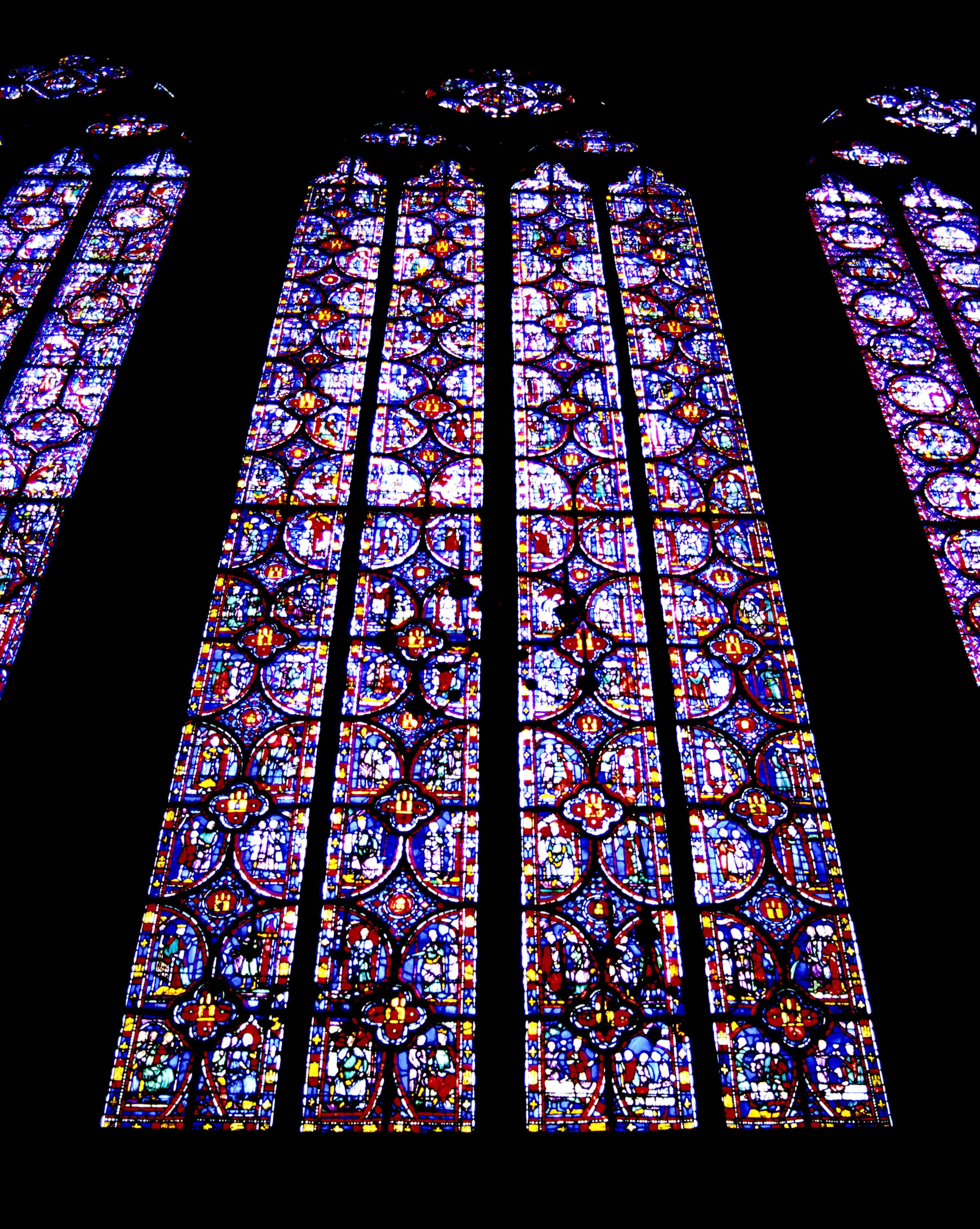
13th Century Stained Glass, Sainte-Chapelle Church, Paris, France Copyright 2000 by Blair Atherton

13th Century Stained Glass, Sainte-Chapelle Church, Paris, France Copyright 2000 by Blair Atherton

As I understand it, faith is the certainty in one’s belief in some thing or someone. Of course in the context of spirituality, faith usually refers to one’s certainty in the existence of a higher being, Universal Energy, or Creator.

When we say we have faith in a person, we are letting them know that we trust them or have trust in them—trust in their abilities, trust that they will not do anything to hurt us, trust that they will be there when we need their help or support.

It could be said that our faith in God has these same attributes and expectations. However, our faith in God is intuitive and comes from spiritual awareness, whereas our faith in a person is experiential and based on concrete knowledge of their past behaviors. Consequently, faith in a higher being is a leap that some are unwilling to take.

Another form of faith refers to trust in a religious doctrine and what are believed to be God’s promises and teachings found in religious scriptures. I believe that one should be cautious here and not let this type of faith to be blind. The scriptures and the clergy should not go unchallenged.

Scriptures from the various religions provide a lot of wonderful guidance concerning how to live a spiritual life of goodness. I think that most of us would independently agree on which passages provide such spiritual wisdom.

However, skepticism about other passages is healthy and may provide deeper insight. We would be remiss if we blindly accepted everything in the scriptures as the word of God. We were given the ability to reason and, if we apply it, we will be able to distinguish the word of God from those of men.

Related articles

Faith and Spiritual Awareness

What is Spiritual Awareness?

Spiritual Kinship

Copyright 2014 by Blair Atherton

Copyright 2014 by Blair Atherton

Is there spiritual kinship among all living things, especially people? The answer to this question depends on what you believe about the nature of our existence.

As indicated in previous entries to this blog, I believe that we exist as spirit and that we all come from the same Source. In spirit form, free of the physical body, all distinctions of race, ethnicity, national origin, gender, socioeconomic status and so forth disappear.

As children of God, we are all kindred spirits with sameness likened to identical twins. In spirit form, we all “look” alike, and when first born as spirit, we all have the same potential for spiritual development.

If we genuinely understood our spiritual kinship, then we would care for all people as we care for our husbands, wives, children, and so forth. We would never allow anyone to be cold, hungry, or thirsty.

There would be no envy, struggles for advantage or power, and no greed. Rather our love for all of our spirit kin would compel us to raise others up and fulfill their needs without hesitation or thought about ourselves.

I believe that all of humanity has a spiritual kinship. The challenge is not so much to come to this realization, but rather to live in a manner that reflects such a belief.

Related articles

We Exist in the Ethereal Spaces Between the Atoms

What is Spiritual Awareness?

It’s Not All About Me

Charity Doth Call My Spirit Forth

imagesNCSC76AN

Charity that comes from the heart is an act of love and compassion where the spirit reveals itself in all of its divine glory. It raises us up ever so slightly so that our feet seem to lose touch with the ground, if only briefly. With each charitable act, a wave of happiness and fulfillment washes over us and for those few moments, we understand the meaning and purpose of life. We realize that our joy comes from giving of ourselves—our spirit selves—to others.

But too often these moments are fleeting. When our feet touch the ground again, we find ourselves yearning to soar once more, free of the constraints, obligations, and selfish desires of the physical life. But it is not our time to fly away just yet. We must prove ourselves worthy of wings.

It is my belief that charity is a human and spiritual responsibility. We must strive to make charity a central part of our everyday life. Charity is an important way that we can express our spirit or spirituality. In its pure form it is an act of unselfish love and compassion with no expectation or desire for material gain or recognition.

If you make a big deal about how much you contribute to charity or about things you do to help others, you seek to raise yourself up in the eyes of others. On the other hand, if you are humble and your charity is motivated only by genuine caring for others, you raise yourself up in the eyes of God.

The charity of a spiritual person is generally done privately and seen only by those they are helping, or by the charitable foundation receiving their donations. That is to say, they do it because they see people in need and they know the right thing to do is help if they can.

We Exist in the Ethereal Spaces Between the Atoms

We Exist in the Ethereal Spaces Between the Atoms Copyright 2013 by Blair Atherton

We Exist in the Ethereal Spaces Between the Atoms
Copyright 2013 by Blair Atherton

As noted in my book and in previous blog articles, I believe that our true life is one of spirit. That is why I promote the idea of living a life of spirit rather than one anchored in the physical world.

We were created in spirit and will remain so forever more. Our spiritual existence does not stop or go into abeyance during the brief periods when we are clothed with a physical body. We may lose touch with our spirit-self from time to time, stupefied by the many distractions of the physical world.

But in the background, out of the din, our spirit cries out for expression. The challenge is to have the presence of mind and desire to hear it.

Our spirit calls to us with the sweet, soft voice of a lover, to remind us that we exist in the ethereal spaces between the atoms of the physical world. We are merely passers by and should consider what spiritual legacy we wish to leave behind in the physical world, because that is the only thing that will follow us when it is time move on.

While all that is composed will eventually be decomposed, our spirits will continue to exist as a part of our everlasting Creator. Just as He has always existed and always will, so shall we.

Note: The last paragraph above relates to my blog article of August 2, 2013 titled All That Is Composed Shall Be Decomposed.

Prayer: Spiritual or Self-Serving?

Lord, please hear my prayer! Copyright 2008 by Blair Atherton

Lord, please hear my prayer!
Copyright 2008 by Blair Atherton

Prayer, for most of us, is the primary means by which we communicate with God. The question is: what should we be saying when “speaking” with Him?

It seems that many who pray use it mostly to ask for things they want, even though God has already provided what they need. This is in keeping with the self-centered, materialistic mind-set of society today.

Why should one ask for more than they need when there are so many around the world who are barely able to scratch out the most basic existence? To ask for more when we already have enough, may be offensive to God. He has a life plan for each of us and He will provide precisely what we need to support that life plan and the service to which we have been called.

I question the value of saying prayers prescribed by a religion in a long chain over and over again. The repetitive nature of this form of prayer can quickly make the process one of a mindless drone. If the first repetition was said from the heart with sincere and conscious intent, then enough said.

Saying the same prayer again and again is not likely to give it greater force. In fact, it may even have a negative effect. Who wants to hear the same thing over and over? Soon one stops listening. When you say a single prayer with all of your heart and soul, it will be heard throughout all of the heavenly spheres with clarity and power.

And praying should not be restricted to time spent at one’s place of worship. Prayer should be an ongoing, frequent, daily practice said anywhere at any time. This is especially true for prayers of thanks. As a continuous process, prayer is a spiritual presence of mind where one is always aware of the presence of God in all things.

We should not make “promises” to God such that if He gives us X, then we promise to change our ways or do Y. Instead, we should attend to how we live on a daily basis, and always treat others with kindness. Then we will be rewarded without asking.

We are all human with limited ability to protect ourselves from harm and to cope with pain and suffering. If we find ourselves in a dangerous situation, or we suffer from some malady, prayer can often bring the help and strength we need to endure.

When we ask for material things for ourselves, prayer becomes a hollow self-serving exercise that may fall upon deaf ears. However, prayer becomes an expression of our spirit when we use it to give thanks for what God has chosen to give us, to ask for help for others, and to seek guidance concerning how we can be better human beings.

What is Spiritual Awareness?

And My light rose up... Copyright 2008 by Blair Atherton

And My light rose up…
Copyright 2008 by Blair Atherton

My personal spiritual experiences have led me to view what we mean by spiritual awareness differently than many people. Perhaps the most common and basic concept of spiritual awareness is simply an awareness of, or belief in, a higher being. I see this as a very limited and somewhat passive perspective.

My view of spiritual awareness is much more expansive and active. As discussed last week, this awareness most often begins with a belief in God, but spiritual awareness is not a belief, it is an experience.

As one’s spiritual awareness expands beyond basic belief, things happen. One begins to have inspirations and revelations. New knowledge and/or understanding blossom within us. Sometimes knowledge we already had springs forth with a new perspective, or takes on a deeper meaning and significance. This new meaning sometimes compels us to take action of some sort.

Expanding spiritual awareness and knowledge often bring with them new responsibilities that may require personal sacrifices. An example from my own spiritual evolution was the realization and belief that it is wrong to raise animals for food. This grew out of my expanding spiritual understanding of how all life forms are interconnected with each other and with the Source.

I took responsibility for this revelation by committing to vegetarianism and I am now a staunch supporter of animal rights. As one acquires more spiritual knowledge, one must adapt their thinking and behavior to reflect that knowledge. This is why I refer to spirituality as a developmental or evolutionary process.

To experience a more expansive spiritual awareness, we must truly open our minds and put aside any preconceived notions and prejudices. If we want to experience deeper levels of spiritual awareness, all we need do is ask, but we must be willing to change in response to the spiritual knowledge and understanding we receive.

Faith and Spiritual Awareness

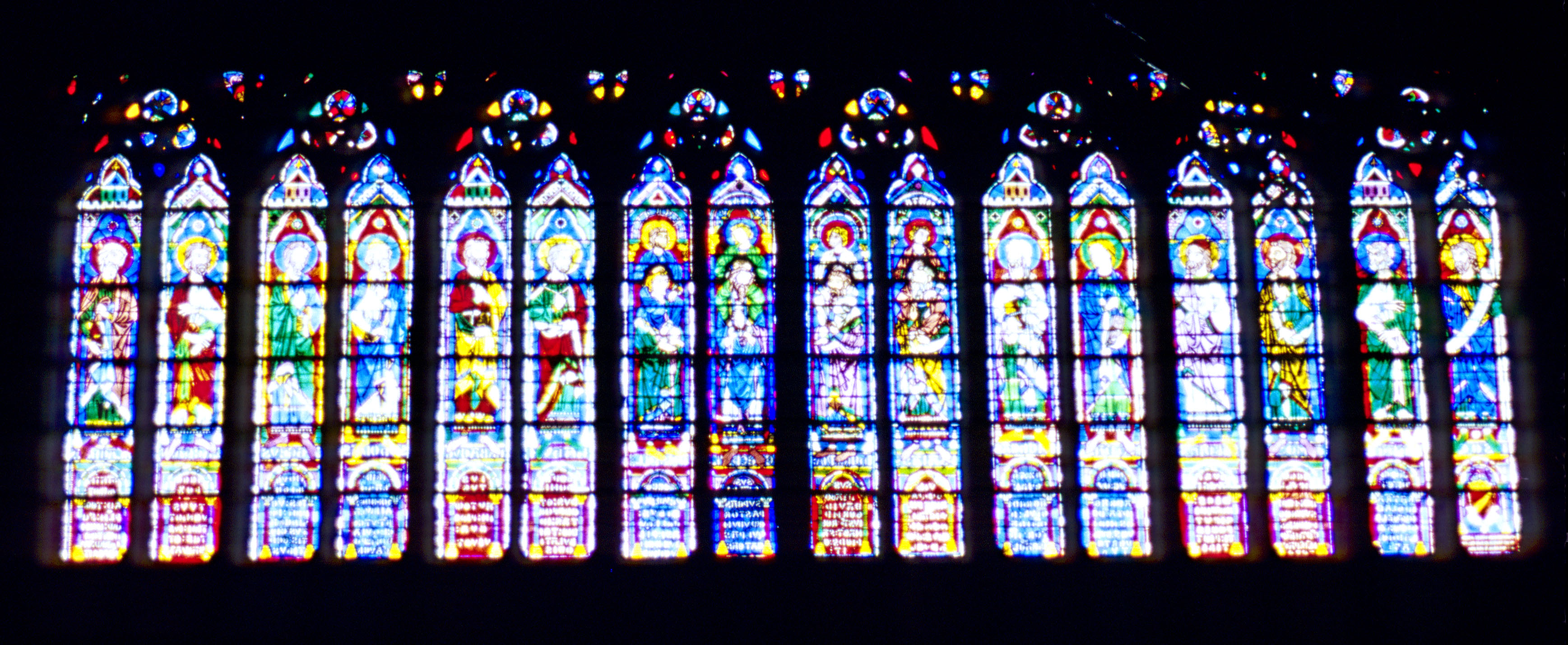
The Sixteen Prophets, Notre Dame Cathedral, Paris, France. Copyright 2000 by Blair Atherton

The Sixteen Prophets, Notre Dame Cathedral, Paris, France. Copyright 2000 by Blair Atherton

Are faith and spiritual awareness the same thing? This is an interesting question and no doubt there are many different views concerning the answer.

In thinking about this in the context of my own religious and spiritual experiences, I am of the belief that they are not the same. I see faith as a doorway or threshold through which most people must pass in order to begin a path to spiritual awareness. There are exceptions to this, but for most of us faith in a higher being is a necessary first step.

At the same time, simply believing in God is not sufficient for becoming spiritually aware. If we think about it, we realize that we know many people who participate in the rituals of organized religion but show no signs of spiritual awareness. When they walk out the door of their place of worship they leave God behind and return to their often self-centered and materialistic lifestyle. This can also apply to those who believe in God, but do not participate in organized religion.

In contrast, those with spiritual awareness see the world very differently. They see God in everything around them. They feel his presence every minute of every day. They constantly give Him thanks and praise, and they make a very conscious effort to live a life of goodness. They hold themselves accountable for their mistakes, wrong-doing, and transgressions, and they have genuine repentance.

Living a spiritually aware life may be a paradigm shift for many. Nevertheless, once having found the doorway to a spiritual life, do not be afraid to pass through. Keep an open mind and be prepared to make sacrifices and take on new responsibilities inherent in the knowledge you will receive.

Affirmations for Enhancing Spirituality

Rosewood Acoustic Guitar Back  Copyright 2012 by Blair Atherton

Rosewood Acoustic Guitar Back Copyright 2012 by Blair Atherton

How can we enhance our spiritual way of living? There are a number of ways, but I would like to discuss something called affirmations. These can be very effective in changing things that you do not like about yourself and also to enhance behaviors that contribute to your fulfillment as a spiritual person.

I was first introduced to this practice by a book titled Creative Visualization by Shakti Gawain. Her focus was mainly on enhancing one’s material life. For my own part, I have used affirmations primarily for changes in behavior, and enhancement of a spiritual way of living.

The idea is that you send out requests into the universe (or to the subconscious mind or to the higher self depending how you wish to view it). Once the request has been floated, the universe goes to work to make it happen. It is important that you do not have any preconceived notions about how the request should or will be fulfilled. Further, affirmations must be positive statements about a new state desired, not statements about what you do not want to be.

An affirmation is the assertion that something (already) exists or is true. The idea is that if you repeat something over and over with conviction and total confidence that it already exists, then it eventually will come to be.

However, the change will not happen immediately; it takes time for transformation to occur. You must be patient and consistent in making your affirmations. A good practice is to identify a time to do your affirmations at least once a day. For example, I often do them when I take a walk and/or during my daily Tai Chi practice. But you should do them whenever you think of it throughout the day. You can work on them one at a time, or several together, but not more than two or three in a given session. Too many at a time weakens the power of each individual request.

Affirmations can also be done as a sort of meditation where you focus intently on what you are saying in the affirmation and repeat it over and over. They can be said silently or out loud. I like to, at least now and then, say them out loud as I believe this adds a little more impetus to them.

Below are a few examples of affirmations I use, but you are encouraged to compose your own to focus on the changes you want for yourself. They should be brief declarative statements that are easy to remember.

I have perfect faith (in God).

I have perfect harmony between spirit, mind, and body.

I am selfless, generous, and humble.

I have love and compassion for all people and all things.

I am loving, kind, and forgiving to all persons at all times, and in all situations and circumstances.

My personal experience has shown that this process is very effective. I encourage you to give it a try.

Harmony Between Spirit, Mind, and Body

South Rose Window, Notre Dame Cathedral, Paris, France. Copyright 2000 by Blair Atherton

South Rose Window, Notre Dame Cathedral, Paris, France. Copyright 2000 by Blair Atherton

It seems to me that one of the goals as a spiritual person is to achieve harmony between the spirit, mind, and body. Here, I would define harmony as congruity between these three aspects of being. All three are integral parts of our existence, and as such interact with, and influence one another.

I think congruity is a key word here. In order for there to be harmony, the mind must be aware of the spirit and understand the nature, meaning, and purpose of a spiritual life. The mind must also be committed to a life of goodness and virtue. The body finds congruity by cultivating good health to fully support expression of the mind and spirit through outward action.

The state of the mind determines the extent to which the spirit is able to express itself. If the mind is at peace, open, and seeks spiritual awareness, it will come. When this happens, the mind is compelled to seek outlets for expression of the spirit-self. There is a transformation in one’s motives, intent, and desire.

When harmony is achieved, love and compassion for all things dominates the person’s world view. One’s thoughts are outwardly directed toward the needs of others. There is a strong desire to serve God and humanity, and material things become relatively unimportant. Expression of the spirit energizes mind and body bringing feelings of happiness and well being.

Prayer for Harmony

Dear God,

I strive to make myself whole, and by doing so come closer to you.
I wish to find the sacred harmony between spirit, mind, and body.
My only desire is to serve and honor you by expression of my spirit
through acts of love and compassion.

I pray that my spirit may one day become attuned with, and radiate your divine love for all things.

Amen

Let Us Not Forget the Little Children

Copyright 2012 by Blair Atherton

Copyright 2012 by Blair Atherton

Children today are raised in a society that values wealth, prestige, personal appearance, and professional accomplishments. Therefore, these are the things for which our children strive. Too often these materialistic aspirations are not sufficiently complemented with spiritual values.

This is a challenge for those families that do not participate in organized religion. It takes an enormous effort and resolve on the parent’s part to introduce children to a higher being and spiritual concepts on their own at home. Consequently, spiritual matters are sometimes overlooked entirely in a child’s upbringing.

If this happens, it is regrettable because it can cast the child adrift in the sea of materialism without a compass. They may soon be lost to the dark forces that lay in waiting. They can’t help but think that the material world is all that there is. Perhaps this has contributed to some extent to the state of society today.

Maybe it is a matter of breaking things down to their most basic level. What are the central attributes of spirituality that provide us with a code by which to live? What are the guiding principles we can use to shape our behavior and become spiritual citizens of the world community?

Most important for nurturing spirituality in our children is the role model we provide. Children learn a great deal by example. The pre-teen years are perhaps the most critical for instilling the concept of a Creator and spiritual principles and values in children. We must be constantly aware of our own behavior around children and how we demonstrate spiritual values and their application in our everyday lives.

Let us not forget the little children for they will shape the society of tomorrow. Let us not forget the little children for they can help us to become better human beings.

Author’s note

I would very much like to hear from readers about how they have instilled spirituality in their young children outside of religious practice.