A Presence Palpable

Source: Wallpaperup.com

Source: Wallpaperup.com

I believe that God should be a part of our every waking moment—a presence palpable. We should honor Him and pay homage to him throughout our day. We can do this in many ways. A very important one is for goodness to permeate our every thought and action. Working and living for good encompasses selflessness, a strong desire to help others whenever we can, and when needed, self-sacrifice to serve others before ourselves.

The attribute of goodness is a state of elevated spiritual being and connection with God. It is an expression of our spirit-selves. Inherent in (and requisite for) a life of goodness is compliance with Gods commandments and mindfulness of His natural laws.

We also honor God by being present in the moments of our day so that we take notice of the beauty and wonders of nature all around us even in the most mundane setting. When we do this, we begin to see the beauty of God Himself, in that He is, and is in all things. On these occasions, our spirits soar toward the heavens, even if only for those few precious moments. We cannot help but yearn for more of such time on the wind.

In addition to these ways of daily living, we should also set aside time (preferably a day) each week for rest and relaxation to recuperate from the demands of family and work. In other words, we should always remember the Sabbath and use the time to seek greater spiritual understanding and insight. I believe this time is meant to be spent in a quiet place alone with our thoughts rather than at a place of worship with its many distractions.

This is a time where we devote ourselves to reflection and contemplation about spiritual matters and how it is that we are living our lives. It is a time for obeisance and communion with God. It should be a time when He is a presence palpable, rather than abstract.

You might like to see the following related articles:

Spirituality as a State of Being
Nature: A more Expansive Spirituality

On the Nature of God

Mysterious Landscape by lxrowe From deviantart.com

Mysterious Landscape by lxrowe
From deviantart.com

Who or What is God? I wondered about the nature of God, and when I sat down at the computer the verse below is what came out. The qualities that we imagine God or a higher being would have are to some extent ineffable, a paradox, enigmatic, and most certainly beyond our limited awareness and understanding.

An Ineffable Paradox

I am the uncreated One.
I cannot be created or destroyed.
I exist apart from the bounds of space and time.
I am beyond beginning and end
For I have always existed and always will.

I am both the Creator, and that which I created
For I made everything in heaven, Earth, and the universe.
I am everywhere and in all things.

I can transform myself into countless forms.
Yet, I am without form.

I am unknowable and unseen, but everywhere you look.
I am Love which is testimony to my existence!
I am what I am.

Copyright 2014 by Blair Atherton

You might like the following related articles:

I Am Spirit

The Quintessence of Life

To What Doth My Heart Hearken? Part 1

The Law of Retribution and Compensation

From WallpaperUp.com

From WallpaperUp.com

**For this Law’s relationship to the Law of Cause and Effect see How Life Works.

If we do not comply with God’s laws and neglect or hurt others, then there will be a price to pay. Punishment may be in the form of pain and suffering, through karmic experience, and/or other forms of which we are unaware. There must be consequences for our thoughts and actions or we would not learn and grow spiritually.

While the foregoing is easily understood, what is not clear is the extent to which we may be able to compensate or offset our wrongdoing with good deeds or by setting things right once again. There may be transgressions that are just too serious to be offset in some way. Further, compensation may only reduce the punishment, rather than totally avoid it.

Nevertheless, it is good to know that the opportunity for compensation exists, and we should always strive to do so. Based on the Law of Cause and Effect, good deeds done with purity of intent will always have a positive effect whether or not they provide compensation for our transgressions.

I hope that all readers will take seriously all of the natural and spiritual laws discussed in this series of short articles. Do not allow their simplicity or familiarity lead you to think them trivial or prevent you from using them as a guide for how you live your life. They have and will continue to govern what your life will be like now and in the future.

Try very hard to love your neighbor as yourself. Be honest and kind, and have compassion for others. Help those in need whenever you can. The extent to which you are able to do so will determine the degree to which you will progress spiritually and whether you will find true happiness in this life.


Author’s Note

Another spiritual law, the Law of Service, was discussed in a previous article (see below).

You might like the following related articles:

What is Salvation?

The Law of Service

What Natural or Spiritual Laws Govern Our Lives?

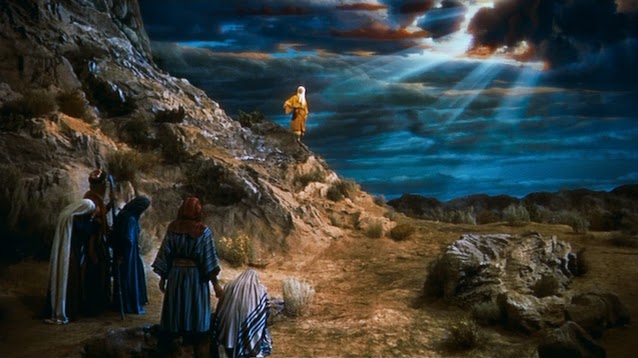
Matte Painting Appearing as Background in the Hollywood Movie The Ten Commandments Source: http://nzpetesmatteshot.blogspot.com

Matte Painting Appearing as Background in the Hollywood Movie The Ten Commandments
Source: http://nzpetesmatteshot.blogspot.com

This question will be covered in a short series of articles over the next few weeks. In my view, there are two types or classes of God’s laws. There are laws like the Ten Commandments and some of the teachings of Jesus that make clear what we should not do and others that direct how we should live our lives.

In addition, there are spiritual laws that determine how our lives will proceed in this world and the next based on how we live and behave now. Upcoming articles will focus on this group. The beauty and elegance of these laws is in their simplicity. There is no escape from their application as they operate automatically. Both sets of laws determine the degree to which we progress and evolve spiritually.

Below I have listed a summary of the Ten Commandments. How many of them can you recall before looking at the list? While perhaps the majority would say they know them, when was the last time they called them to mind and reflected upon them? How many people hold the commandments in constant memory to guide their actions on a daily basis?

The Ten Commandments

1. Thou shalt have no other gods before me.

2. Thou shalt not worship, bow down to, or serve idols.

3. Thou shalt not take the name of the Lord thy God in vain.

4. Remember the Sabbath day, to keep it holy.

5. Honor thy father and thy mother.

6. Thou shalt not kill.

7. Thou shalt not commit adultery.

8. Thou shalt not steal.

9. Thou shalt not bear false witness against thy neighbor.

10. Thou shalt not covet anything that is thy neighbor’s.

There are two additional commandments put forth by Jesus that are said to be the greatest of all commandments and encompass the Ten.

• “Thou shalt love the Lord thy God with all thy heart, with all thy soul, and with all thy mind.”

• “Thou shalt love thy neighbor as thyself.”

I think many of us would agree that violations of many of these commandments run rampant in today’s society. With increasing numbers of people turning away from religion, perhaps they have forgotten them or chosen to ignore them.

To me, the Ten Commandments along with love thy neighbor represent, in large part, a set of fundamental principles to govern and assure the integrity of human relationships. In this regard, I believe love thy neighbor stands above and drives compliance with Commandments 5-10. If we strive to treat all people with whom we come in contact the way we would like to be treated, then we would not do any of the things listed in 5-10.

Sadly, it seems that honesty and integrity are attributes that too many members of society have put aside in order to satisfy their physical and material desires. Little do they know what they have lost in doing so.

The Bible says love is fulfillment of the law. To love is our divine nature. If we let love guide everything we do in all of our interactions with others, then we will have fulfilled our spiritual imperative.

For a discussion of the Law of Cause and Effect, and the Law of Compensation and Retribution please go to How Life Works.

We Exist in the Ethereal Spaces Between the Atoms

We Exist in the Ethereal Spaces Between the Atoms Copyright 2013 by Blair Atherton

We Exist in the Ethereal Spaces Between the Atoms
Copyright 2013 by Blair Atherton

As noted in my book and in previous blog articles, I believe that our true life is one of spirit. That is why I promote the idea of living a life of spirit rather than one anchored in the physical world.

We were created in spirit and will remain so forever more. Our spiritual existence does not stop or go into abeyance during the brief periods when we are clothed with a physical body. We may lose touch with our spirit-self from time to time, stupefied by the many distractions of the physical world.

But in the background, out of the din, our spirit cries out for expression. The challenge is to have the presence of mind and desire to hear it.

Our spirit calls to us with the sweet, soft voice of a lover, to remind us that we exist in the ethereal spaces between the atoms of the physical world. We are merely passers by and should consider what spiritual legacy we wish to leave behind in the physical world, because that is the only thing that will follow us when it is time move on.

While all that is composed will eventually be decomposed, our spirits will continue to exist as a part of our everlasting Creator. Just as He has always existed and always will, so shall we.

Note: The last paragraph above relates to my blog article of August 2, 2013 titled All That Is Composed Shall Be Decomposed.