A Spiritual Lifestyle

Behind This Door... Copyright 2008 by Blair Atherton

Behind This Door…
Copyright 2008 by Blair Atherton

This blog has discussed what it means to be a spiritual person from a variety of perspectives. From what has been covered so far, we can begin to see the attributes of a spiritual lifestyle.

How many of us have the fortitude, commitment, and determination to actually live a spiritual life? It would seem that much of the world is headed in the opposite direction. There is immense pressure for us to conform to the materialistic, self serving, and ego driven ways of the majority. Truly spiritual people are oftentimes unseen, sometimes down trodden, and seemingly left behind in today’s fast-paced, narcissistic society.

However, in reality, it is the materialists who are being left behind. Society fosters the attitude of “live for today” without regard for the consequences of our actions for tomorrow, for the karma of this, or our next lifetime, and especially for one’s spiritual development and progression.

We are all caught up in this windstorm of materialism to varying degrees. It is all around us, and it has shaped the values of a declining society. It seems a great many people do not know any other way to live.

The disillusionment and distrust with organized religion has certainly not helped. It has resulted in not only a self imposed excommunication from religion, but also from many of the moral and scared values embedded in religious teachings. I hope that those who have left their religion have not also abandoned a belief in God.

A major theme in my writing and in my beliefs is that the most important thing whether you participate in organized religion or not is to live a life of goodness, moderation, compassion, humility, and charity. What matters most is how we treat other people. To a great extent this is what defines us as individuals and as a society.

“What would you have me do I ask [of God]?
The answer came swiftly and powerfully in a single word
That echoed and resonated in the essence of my being—LOVE!”

(This quote is an excerpt from my blog on 6/8/13 titled To What Doth My Heart Hearken?)

An Impediment to Our Spiritual Evolution

Garfish, Dominica, W.I. Copyright 2008 by Blair Atherton

Garfish, Dominica, W.I. Copyright 2008 by Blair Atherton

Nature is an all pervasive spirit of love and beauty that fills and nurtures all things. All living things are her offspring and each is loved equally by her. So too, all of her children should love one another to the same degree and without prejudice or favoritism.

Last week’s article on spirituality and nature raises issues about how we view and treat animals. These matters derive in part from the statement “If all things are a part of God, then all things are sacred and demand our reverence, respect, compassion, and protection.”

I believe that animals are at a higher level of consciousness than we may think. Each has its place and role in the spiritual ecology of our world. Animals have as much right to life and freedom as we.

As noted last week, it is our arrogance and self serving nature that leads us to view animals as inferior and/or as food items put here for our consumption. I believe deep inside of me that it is wrong to raise animals for food. For me, it is a fundamental spiritual truth that compelled me to become a vegetarian.

Like any wrong, raising animals in large numbers for food has consequences. Negative impacts on the environment like pollution and global warming are a few examples of the consequential damages of the meat industry (for more details see the author’s note below). There is also a huge toll on the spiritual progression of those who eat meat, support the farming of animals for food, or otherwise refuse to believe that animal life is as precious as human life.

Animals raised for food must endure a great deal of fear, pain, and suffering inflicted by the cultivation and slaughter process. Generally, we don’t want to know much about how livestock are treated and slaughtered because we don’t want to feel guilty about supporting such practices by consuming meat. We know it is wrong, but we do not want to give up our favorite foods. We have come to love the smell of burning flesh and the taste of blood. Would you give up meat if it would save the planet, or if it would remove a major impediment to your reaching new heights of spiritual awareness?

We try to rationalize our choice by saying that if we give up all meat, it will have no measurable effect on the meat industry or the environment. We tell ourselves that one person cannot change the world.

But this misses the point. The world is changed by one person at a time by doing what is right without regard to what others think or do. As more and more people act on their conscience, the next thing you know, changes can be seen, and over time the world is transformed.

One may argue that man has been killing animals for food since time immemorial. But man also has an equally long history of brutality and little regard for human life as well. However, through the ages, humanity as a whole has progressed in its spiritual evolution and now the brutality and large scale killing of humans is primarily reduced to relatively small groups of religious extremists, dictatorial governments, and fanatic groups.

As a race our spiritual awareness has reached the point where we have come to understand that killing each other is wrong. The next step in our spiritual evolution is to recognize that killing animals is wrong too.

Author’s comment:

I urge everyone to read one or more of the following short articles that summarize the environmental impacts of the livestock industry.

A 12-Year-Old Girl on Why Going Veg Is ‘the Single Most Important Move’ for the Planet

http://www.pbs.org/wgbh/pages/frontline/shows/meat/interviews/pollan.html

http://www.scientificamerican.com/article.cfm?id=meat-and-environment

http://woods.stanford.edu/environmental-venture-projects/consequences-increased-global-meat-consumption-global-environment

Nature: A More Expansive Spirituality

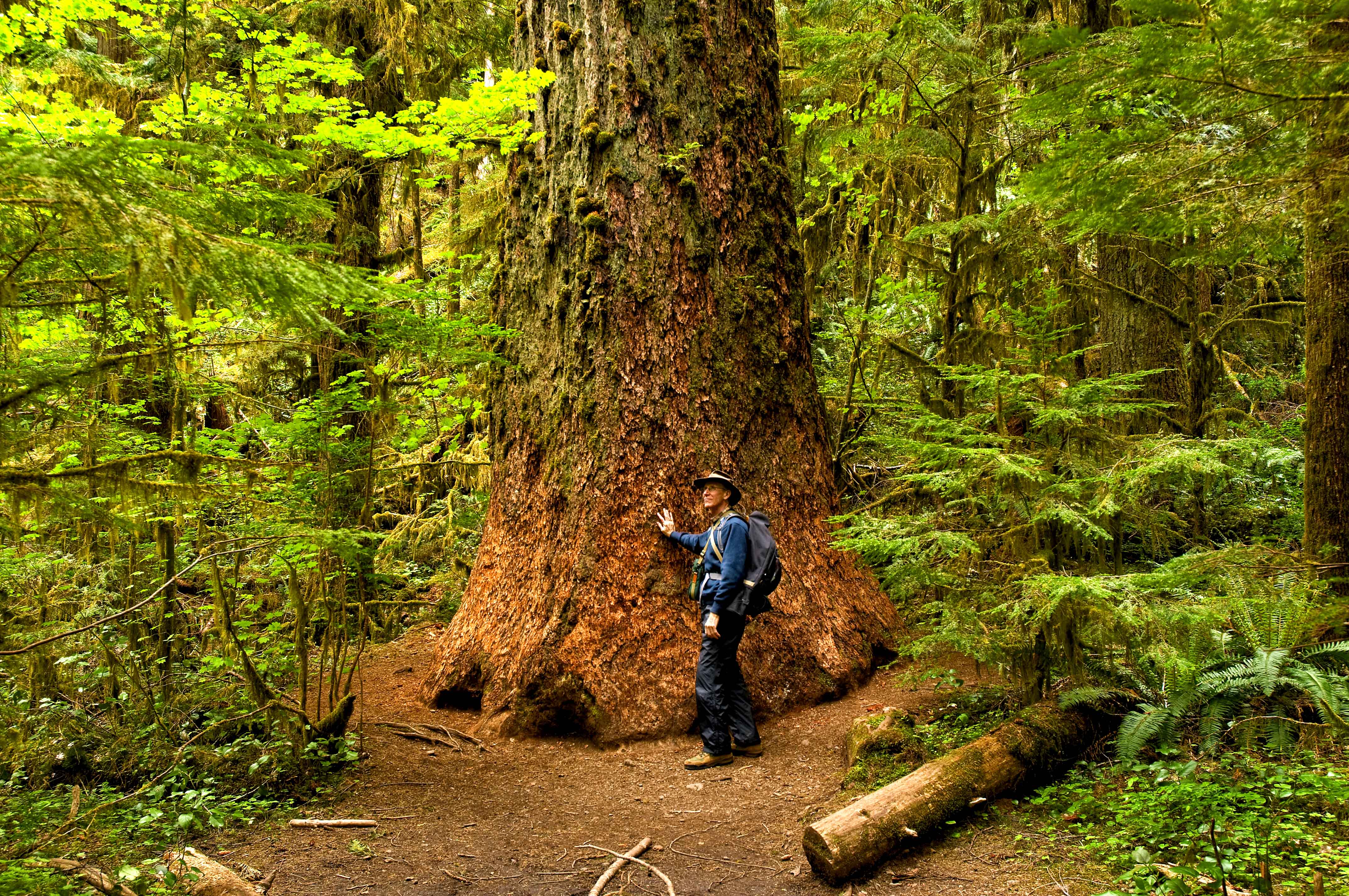
Large Cedar in Olympic National Park Copyright 2008 by Blair Atherton

Large Cedar in Olympic National Park Copyright 2008 by Blair Atherton

When we go to beautiful wild places to get away from it all, it is sometimes difficult to describe what we feel. For me, it is an inexplicable feeling of a belonging—a homecoming of sorts. It is a joyful feeling like I have met my soul mate. I want to linger endlessly and I lament when I must return to the steel and cement world.

This feeling of nature—the trees, animals, bugs, rocks, etc—as soul mate says something very profound. For those few hours, days, or however long in beautiful natural surroundings, we are on the threshold of awareness that we are a part of all of the earth and all living things that comprise nature. They are all a part of God and his divinity is a part of us and all things. As Jesus has told us in the Gospel of Mary Magdalene, “All that is born, all that is created, all the elements of nature are interwoven and united with each other.”

Recognition of this truth has implications. One is that we are participating in an evolution of the earth and all life on it. We are but one species among many on a trajectory of growth in consciousness and spiritual awareness. This knowledge carries with it great responsibility. If all things are a part of God, then all things are sacred and demand our reverence, respect, compassion, and protection.

Although we may see humanity as superior to other forms of life, God may not share such an egocentric view. If that is the case, then other species may hold potential for development equal to us in God’s eyes. It could be that they are just not as far along in their evolution as we.

Thomas Berry believed that God placed humanity within the natural order rather than above it. It is our arrogance as a species that sees itself as the one most pleasing in the eyes of God. Given the direction that humanity has taken in recent history, this may not be the case.

If God is everywhere and in all things, then exploitation and destruction of our planet and the life it holds are affronts to God. It is our arrogance in believing that our science and technology can master the forces of nature or improve on what God has created that has led to our current environmental, social, and spiritual crisis.

At the same time, I see a quiet, unobtrusive movement in progress. I see more and more people exhibiting various levels of spiritual enlightenment concerning the environment. I see small steps that help to reduce harm to the planet like buying organically grown foods, moving away from a meat-centered diet toward a more vegetarian diet, avoiding genetically modified food products (GMOs), greater sensitivity to animal rights, recycling, driving hybrid or electric cars, and so forth.

While these may seem like small things, they suggest a growing awareness of what has been discussed here. They are indications of the beginning of a step forward in spiritual evolution and awareness that will change the world in so many wonderful ways.

You also might like the following related article:

One Species Among Millions


What Can We Learn About Spirituality from the Example of Others?

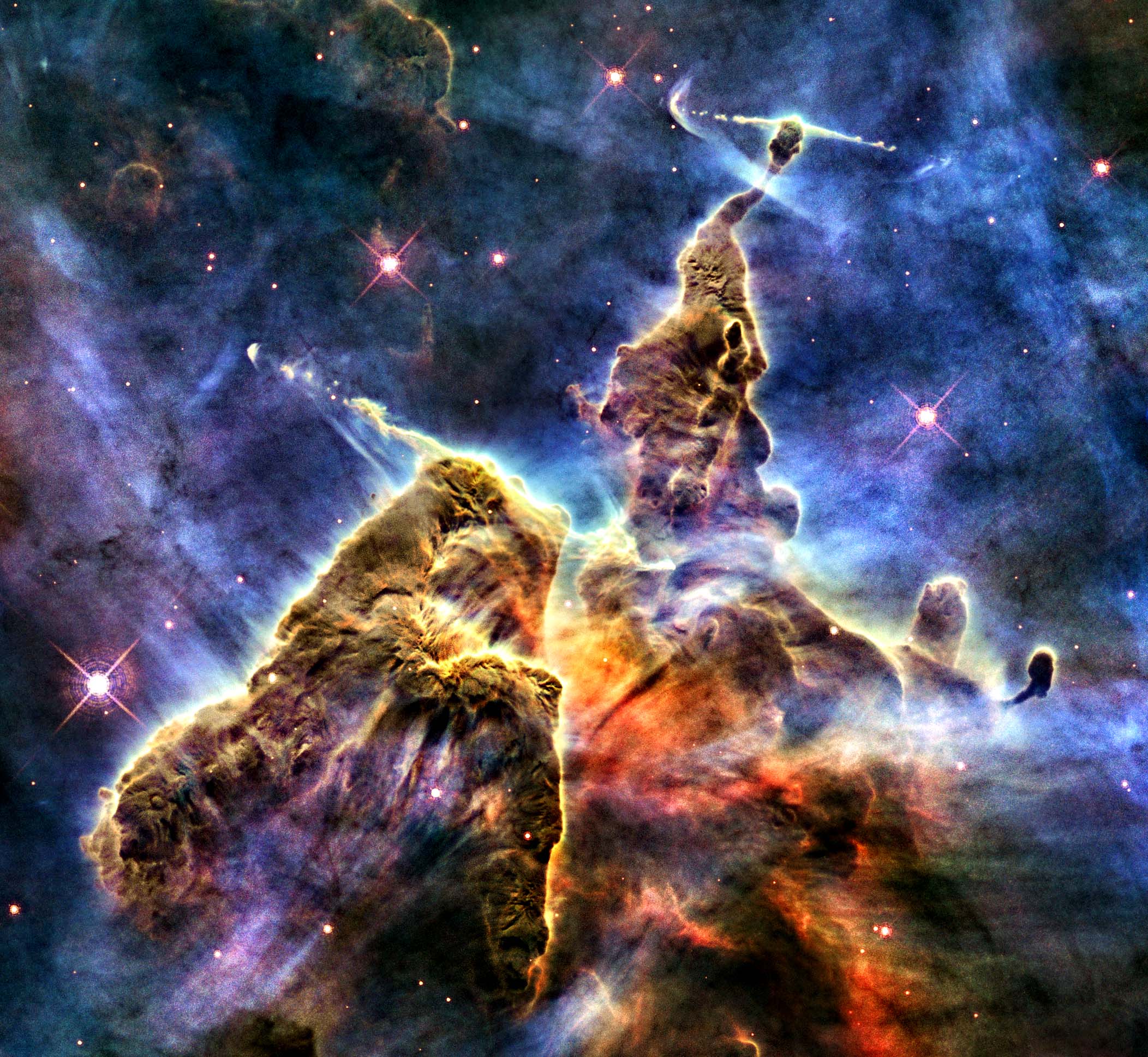
Hubble Captures View of 'Mystic Mountain' Credit: NASA, ESA, and M. Livio and the Hubble 20th Anniversary Team (STScI)

Hubble Captures View of ‘Mystic Mountain’ Credit: NASA, ESA, and M. Livio and the Hubble 20th Anniversary Team (STScI)

There are many people who provide examples of how to live a spiritual life. These include not only historical religious figures, but also ordinary people. They demonstrate in their everyday lives what it means to be a spiritual person.

When I heard that the new Pope decided to take on the namesake of Saint Francis, it brought back some childhood memories. I was attending Catholic school in second grade when the class went to the theater to see a movie about the life of Saint Francis of Assisi. I was very captivated by the movie. I remember saying to myself, “I want to be like him.“

I did not want to be a priest or friar, rather I wanted to emulate the way he lived. I wanted to put into action his unwavering humility, selflessness, self-sacrifice and devotion to God. He accepted any and all adversities that God threw at him willingly and without complaint.

Of course at that young age, I had no idea just how hard it would be to imitate Saint Francis. Nevertheless, it became a life goal.

Below is a favorite prayer attributed to Saint Francis that I believe sums up how he looked at spiritual life. This is not a prayer just for Catholics or Christians; it is an approach to spirituality and life that can benefit all of us.

Let us pray:

“Lord, make me an instrument of your peace.
Where there is hatred, let me sow love.
Where there is injury, pardon.

Where there is doubt, faith.
Where there is despair, hope.
Where there is darkness, light.
Where there is sadness, joy.

Dear God, grant that I may not so much seek to be consoled, as to console;
To be understood, as to understand;
To be loved, as to love.
For it is in giving that we receive;
It is pardoning that we are pardoned;
And it is in dying that we are born to eternal life.
Amen.”

What really rang true to me about Saint Francis’ view of spirituality is looking past, and going beyond, oneself. He sought to attend to others without regard to his own needs. To me, the prayer above speaks volumes about what it means to be a spiritual person.

At the same time, there are many quiet, gracious, inconspicuous truly spiritual people with whom we come in contact in our everyday lives who may or may not subscribe to any particular religion. Make it a point to pay attention to what is going on around you and you will see them. We can learn much from watching them.

Doing good and helping others is second nature to them. When they see a need, they do their best to fulfill it. They do it without hesitation or having to think about it. Recognition or gain of any kind never crosses their mind even for a moment. It is who they are; they have found their spirit-self.

How wonderful it is that they have chosen to share their divine selves with us! How wonderful it will be for us to join their ranks!

“All that is composed shall be decomposed.”

Omega Swan Nebula, Credit: NASA, ESA and J. Hester (ASU)

Omega Swan Nebula, Credit: NASA, ESA and J. Hester (ASU)

In the traditional or canonical gospels found in the New Testament of the Bible, Jesus or Yeshua, his Aramaic name, gives us a wonderful way of looking at spirituality and how to live a truly spiritual life. There are other records of the teachings of Yeshua that were excluded from the Bible. They are referred to collectively as the Gnostic gospels. I found three: The Gospel of Phillip, The Gospel of Thomas, and the Gospel of Mary Magdalene.

After reading all three, the first thing that struck me was that they were almost completely devoid of stories about miracles. Instead they were composed of what we might call the wisdom or sayings of Yeshua. I saw nothing heretical about them; rather, they provided additional teachings to compliment those in the Bible. The three gospels provided a great deal of food for thought concerning spirituality.

None more so than the Gospel of Mary Magdalene. It was frustrating to learn that ten of the pages are missing. Frustrating because the missing pages are adjacent to what I feel are some of the most mysterious passages. What happened to the missing pages? Were they removed by someone to withhold certain secrets of spirituality, or simply damaged or lost? What do we not know in their absence?

The first ten lines from the Gospel of Mary Magdalene that follow had an especially powerful effect on me. The six pages that preceded these passages are missing from the documents that were found.

[…] “What is matter?
Will it last forever?”
The Teacher answered:
“All that is born, all that is created,
all the elements of nature
are interwoven and united with each other.
All that is composed shall be decomposed;
everything returns to its roots;
matter returns to the origins of matter.
Those who have ears, let them hear.”

The basic ideas in these passages are not new to me, but my reaction to them was totally unexpected. When I read these lines in the gospel, it felt like primal memories buried deep in my soul came crashing forward revealing a fundamental, profound truth. The feelings were so powerful that I felt a little disoriented and confused by the effect they had on me.

These passages spoke to me on a very deep level. The words were both mysterious and wonderful. All of creation is interwoven and united—YES! All that is composed shall be decomposed—that is, all that is physical is transitory. Everything shall return to the Source.

We are drawn to the Source. It is a force of nature that transcends belief. It is that inexplicable yearning for meaning and purpose unique to the human condition. It is the search for our spirit-self and its birthplace.

Shall the Meek Inherit the Earth?

Abstract Art Found in the Orion Nebula, Credit: NASA, ESA, and The Hubble Heritage Team (STScIAURA)

Abstract Art Found in the Orion Nebula, Credit: NASA, ESA, and The Hubble Heritage Team (STScIAURA)

Those of you with Christian backgrounds may recall the Beatitudes presented by Jesus during his Sermon on the Mount. They are all wonderful sayings by which to live a spiritual life.

One of my favorites is “Blessed are the meek for they shall inherit the earth.” This beatitude has been interpreted from the original Greek in a number of slightly different ways. For example, “earth” has also been interpreted to mean the Kingdom of Heaven which gives the beatitude a decidedly spiritual meaning. Alternate translations of the word “meek” include humble, gentle, and poor.

This beatitude could be interpreted as a prophesy of things to come, or simply as a statement of the most desirable sort of spiritual (and human) disposition. I favor the latter possibility. Although, I suppose, it is possible that all of the power hungry egotists could end up wiping each other out, leaving us “meek,” but not weak, spiritual people to transform humanity and save the earth.

I see meek or humble people as having great strength, self confidence, and restraint. They have a certainty that they are on the right path regardless of what others may think. Humble people understand that any talents they may have are gifts from God, and as such, credit should be given to Him whenever they are applied with good effect.

I believe that we should add humility and gentleness to our list of characteristics that describe spiritual persons. Who would be better than the “meek” to make the Kingdom of Heaven a reality on earth?

An Insidious Intruder

A Giant Hubble Mosaic of the Crab Nebula,  Credit: NASA, ESA, J. Hester and A. Loll  (Arizona State University)

A Giant Hubble Mosaic of the Crab Nebula, Credit: NASA, ESA, J. Hester and A. Loll (Arizona State University)

Trying to eliminate ego has been kind of like a teeter-totter for me; just when I think I have it squashed, it pops up again out of nowhere. Over time, I have managed to reduce it to a weak and sickly thing that has only brief rallies of influence before it is sent back to bed.

I have been working to rid myself of ego for many years. It’s a work in progress that I find quite liberating. It requires a lot of conscious effort and determination to extinguish ego, or more accurately to keep it at bay.

By ego I mean a need for recognition, excessive pride, and a feeling of superiority to others. I believe that the prevalence of ego in today’s society is a consequence of materialistic values that appear to be the guiding principle of the majority these days.

As a young man, prior to embarking on my career, I was very humble and all about self-sacrifice and helping others. However, I remember an incident later in life that happened at a time when I was enjoying great success in my career. It illustrates how ego can unwittingly overshadow one’s spirituality and disengage one from compassion for others.

I was walking down a city street with my son when he was 12 or 13 years old. We came upon a homeless man walking toward us. The man was dirty, in rags, weak and trembling. When we met, he did not speak but put his hand out for alms. I ignored him and shuffled my boy past.

My son stopped and grabbed my arm surprised at my lack of compassion. He insisted that I give him some money for the man, and he straight away gave it to him. I had no idea how much I had changed until that moment.

It is difficult for me to admit to having had such a failure of character. I attribute it to ego as it happened during a time, I realize in retrospect, when my ego had a strong hold on me. The innocence and generosity of a child had shown me the depravity of spirit that existed in me during that period of my life. It took a while, but thankfully, I managed to crawl out of the muck of ego, put on clean clothes, and reclaim my spirituality.

This taught me that ego is insidious; it gradually invades the psyche little by little so that one does not notice that it is happening. It can slowly become a more and more prominent part of one’s personality and behavior. By the time your ego is full grown, you are not even aware of what a selfish and self-serving lump you have become.

Ego and the materialistic way of life go hand-in-hand. An inflated image of oneself is intimately intertwined with the selfishness, greed, and lack of compassion we see today.
This is because ego is one of the motivators that drives us to try to seek recognition and prestige from the things we have, where we live, and the people with whom we associate.

I may be sticking my neck out here, but I do not think that recognition or prestige are basic human needs. I believe they are created needs from very effective marketing strategies that span decades. So many advertisements we see play to, or seek to create in us, a “need” for prestige or just being noticed whether it is for white teeth, a flashy car, a big house, or expensive clothes. We must find a way to resist and reclaim our humility and dignity.

How does ego conflict with becoming a more spiritual person? The egotist’s primary concern is their needs. Consequently, ego can prevent us from seeing what those around us need. The sense of superiority that comes with ego can cause us to dismiss or overlook the adversity, suffering, and deprivation that others endure. This is one of the main ways that ego compromises expression of our spirit and militates against our becoming a spiritual person.

We are not defined or valued as individuals or human beings by what we have, how we look, or who our friends are. We are defined by the degree of humility we exhibit, how we live our lives, and how we treat other people; these are indicators of the degree to which we have become spiritual persons.

Wherefrom Comes Happiness?

Taken Under the  Wing  of the Small Magellanic Cloud Credit: NASA, ESA, CXC and the University of Potsdam, JPL-Caltech, and STScI

Taken Under the Wing of the Small Magellanic Cloud
Credit: NASA, ESA, CXC and the University of Potsdam, JPL-Caltech, and STScI

In this day and age, we live in a world that focuses on, and values, material things rather than the spiritual qualities of existence. This has led to the widespread rise of the ignoble qualities of personality in many people such as pride, ego, greed, selfishness, narcissism, and self-aggrandizement. Sadly, it appears that a surprising number of people have not known any other way to live.

At the same time, many of these same people are realizing that success in their career, prestige, and the accumulation of worldly possessions do not bring the happiness they assumed would follow. This has been demonstrated to us again and again through people we know and from stories of celebrities we read about or see on TV. We shake our heads and ask why happiness has eluded such privileged people.

What I have come to know in reflecting on my life is that material things did not make me happy. Rather, loving and helping others has brought me the greatest happiness, satisfaction, and fulfillment.

Although worldly possessions will not bring happiness, wanting for things you do not have can make you unhappy. It is the wanting itself that brings discontent, not the lack of things desired.

In my view, we should not be asking God for material things. God gives each of us the gifts and material things that he wishes us to have and that best serve his life plan for us. We should accept these with genuine gratitude and give thanks. Rather than ask for more, we should share what we have with others, especially the less fortunate.

I believe that praying should be reserved for giving thanks for what God has given to us, no matter how meager it may seem, and to ask for help for ourselves or others who are sick, in pain, or who are having difficulty with the trials and tribulations of everyday life. When we focus on others, the “need,” desire, and wanting for material things disappear, and our spirit begins to express itself.

We need to find a way to replace wanting with unselfish giving. It’s not complicated. This truly is the key to happiness and a spiritual way of life.

Spirituality: A Life of Action

There are many attributes with which one can compare people. This is a murky business because things are rarely just black and white. It is more a question of which human attributes are more prominent than others in an individual. When it comes to exhibiting spirituality, it seems there are those who primarily talk and think about it, and others who mainly do things to help others.

Both are important and contribute to our understanding of what it means to be a spiritual person. However, I believe that one’s actions are far more important in defining one’s spirituality than simply talking about it. Spirituality is a way of living rather than a way of thinking or talking.

It may seem odd to say that actions such as going to one’s place of worship regularly, or reading the scriptures may or may not be indicators of a truly spiritual person. Some of you may know people who do these things, but whose behavior otherwise militates against their being spiritual.

I believe that love and compassion for others are the foundation for living a spiritual life, or as I prefer to say, living the life of spirit. But not as a concept; rather, as an expression or outlet for our spirituality. I believe these two attributes to be at the core of our divinity. If someone is unable, for whatever reason, to express these two attributes, then the path to expression of their spirit-self probably has not yet begun.

More likely is that we do not consistently exhibit love and compassion. We may have biases or prejudices through which we filter who is “deserving” of our love and compassion. This is wherein lies the challenge in trying to fully express our spirit. As hard as it may be, we should strive to have love and compassion for everyone.

It might help to remind ourselves that we do not know what demons others face in life. We do not know what experiences have shaped their current state of existence. We do not know the nature of the karma that brought them to where they are.

But whatever these unknowns may be, we need to try our best to give them the benefit of the doubt and extend a helping hand whenever we can, even though sometimes they might slap it away.

It’s Not All About Me

In my quest to become a more spiritual person I sometimes forget that it’s not all about me. It is so easy to get caught up in focusing on my internal spiritual communion when in fact I should be focusing on everything all around me. A life of goodness must be all encompassing.

I must remind myself that while spirituality is found in part through internal reflection, it goes beyond self. It is not just a personal evolution. It is also making a connection with all of creation. It is about truly caring for (all) others, all living things, the planet, and so forth. With that care comes a sense of responsibility for the welfare of all these things.

I realize that I will not be fully developed spiritually until I  can consistently do that. By directing my awareness on people and things outside of myself, I draw forth the divinity inside me that I want so much to express and experience.

As more and more of us direct our awareness and caring outside ourselves, we join together in a spiritual evolution of the human race. I believe this is our true calling. This is our common path to the highest realms of spiritual existence.