Grateful Awe

Wonderment by Jennifer Alder

Wonderment by Jennifer Alder

I believe that we should always express thanks and gratitude to God for all that we have, whether considered meager, grand, or something in between. Sometimes what may seem meager can be a greater blessing than that which seems grand.

In addition to giving thanks, I think it is important to demonstrate how much we value and appreciate the gifts we receive by taking adequate care of them and not take them for granted. Material things should be scrupulously maintained. Non-material gifts should be nurtured, developed, and used only for good.

If we have a house or a car and we let them get run down due to neglect, then clearly we send a message of arrogance and presumption. If we take our friends and family for granted, then we dishonor them, ourselves, and God. If we are aware that we have special talents and do not use and develop them, or become arrogant and self aggrandized, then we show disdain rather than grateful awe.

We like to take credit for our accomplishments and success. Of course, these require determination and hard work, but it is God who makes our success possible. After all, it is He who imbues us with our special talents, and who opens the doors of opportunity. We should always acknowledge his blessings and gifts with humility.

Let us not forget one of our greatest gifts—our body. A healthy body is one of the essential components for achieving harmony between spirit, mind, and body. It too should never be taken for granted. Neglect of the body is a sign of a disheveled spirit, a lack of respect for one’s self, and ingratitude to God for the life He gave us.

I believe we have an obligation to maintain and care for our bodies. We need to keep our bodies clean, well groomed, and fit, not for the sake of vanity, but to demonstrate our gratitude to God for the body He gave us. We should do everything we can to keep our bodies healthy and free of disease, including following a healthy diet, and not overeating.

Finally, we need to show love, respect, and appreciation for the earth and all of its inhabitants. The metaphor of the earth as our mother is very appropriate since she provides sanctuary and nurture for all living things. She provides everything we need and shelters us from the unforgiving vacuum and death rays of space.

But we need to care for her just as she does us and not take her bounty and protection for granted. Just like our human mothers, she needs our love, help, and support. Her bounty has limits that we must understand and respect. She is not here to only serve humanity, but rather to promote harmony among all living things through their mutual interdependence upon one another.

We have an obligation to conserve her resources, and protect all of her “offspring.” She is perhaps the most wondrous of all gifts from God since it is she who sustains us in this life.

Our gratitude for the things that God gives us, both large and small, should be ongoing through daily expression of thanks and humility, and by treasuring all the gifts and blessings we receive. That is, we should be in a constant state of grateful awe. When we are truly grateful to God and make it a point to let Him know, then we give Him the reverence He so greatly deserves.

You might like to see the following related articles:

Harmony and Health
Harmony between Spirit, Mind, and Body

Nature: A More Expansive Spirituality
 

One Religion or No Religion?

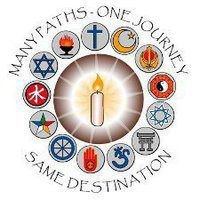
Many Religions, One God Source: vjindigo-wordpress-com.

Many Religions, One God
Source: vjindigo-wordpress-com.

Below is a contemporary view of the essentials of Judaism, at least as seen by the religious body indicated. I found it interesting to note much overlap with some Christian and other religious beliefs as well as those of some persons (myself included) with no religious affiliation who describe themselves as spiritual. It is an excerpt from a public domain book titled Judaism by Israel Abrahams. The book seeks to track changes in Judaism and their origins since the early centuries of Christianity.

A tract, entitled ‘Essentials of Judaism,’ has been issued in London by the Jewish Religious Union. The author, N. S. Joseph, is careful to explain that he is not putting forth these principles as ‘dogmatic Articles of Faith,’ and that they are solely ‘suggestive outlines of belief which may be gradually imparted to children, the outlines being afterwards filled up by the teacher. But the eight paragraphs of these Essentials are at once so ably compiled and so informing as to the modern trend of Jewish belief that they will be here cited without comment.

According then to this presentation, the Essentials of Judaism are: ‘(i) There is One Eternal God, who is the sole Origin of all things and forces, and the Source of all living souls. He rules the universe with justice, righteousness, mercy, and love.

(ii) Our souls, emanating from God, are immortal, and will return to Him when our life on earth ceases. While we are here, our souls can hold direct communion with God in prayer and praise, and in silent contemplation and admiration of His works.

(iii) Our souls are directly responsible to God for the work of our life on earth. God, being All-merciful, will judge us with loving-kindness, and being All-just, will allow for our imperfections; and we, therefore, need no mediator and no vicarious atonement to ensure the future welfare of our souls.

(iv) God is the One and only God. He is Eternal and Omnipresent. He not only pervades the entire world, but is also within us; and His Spirit helps and leads us towards goodness and truth.

(v) Duty should be the moving force of our life; and the thought that God is always in us and about us should incite us to lead good and beneficent lives, showing our love of God by loving our fellow-creatures, and working for their happiness and betterment with all our might.

(vi) In various bygone times God has revealed, and even in our own days continues to reveal to us, something of His nature and will, by inspiring the best and wisest minds with noble thoughts and new ideas, to be conveyed to us in words, so that this world may constantly improve and grow happier and better.

(vii) Long ago some of our forefathers were thus inspired, and they handed down to us—and through us to the world at large—some of God’s choicest gifts, the principles of Religion and Morality, now recorded in our Bible; and these spiritual gifts of God have gradually spread among our fellow-men, so that much of our religion and of its morality has been adopted by them.

(viii) Till the main religious and moral principles of Judaism have been accepted by the world at large, the maintenance by the Jews of a separate corporate existence is a religious duty incumbent upon them. They are the “witnesses” of God, and they must adhere to their religion, showing forth its truth and excellence to all mankind. This has been and is and will continue to be their mission. Their public worship and private virtues must be the outward manifestation of the fulfillment of that mission.’

********************************************************************

Reading this buoys my belief that a gradual convergence of spiritual thought among the people of the world is occurring. Humanity’s spiritual growth, progression, and awareness going forward through the ages may well result, not so much in a single religion, as in a single set of spiritual beliefs that have outgrown the need for the doctrines and rituals associated with organized religion. While this may give the clergy reason for pause, I believe it is good news for humanity because it hearkens toward a common moral code and understanding of the nature and purpose of our existence.

You might like to see the following related articles:

The Universal Religion

With Spirit Eyes I See

Spiritual Kinship


One Man’s Sabbath

Water by Rosalyn Stock Source: mrwallpaper.com

Water by Rosalyn Stock
Source: mrwallpaper.com

This man’s Sabbath begins looking out my kitchen windows at the beautiful golden early morning light shining through the trees. I think about how beautiful it is and wonder how much more beautiful God’s light would be in heaven.

I watch the swirls, ripples, and reflection of light in the lovely blue water and imagine that the quality of spirit may be likened to that of water—free flowing and yielding; yet, its flow cannot be stopped by anything in its path as any impediments will eventually yield to its power.

I get in touch with my body and its internal energy as I do my daily tai chi practice. At the same time, I listen to the birds songs heralding the new day and God’s glory.

Before breakfast I say my morning prayers which begin with the Lord’s Prayer. This is followed by prayers for world harmony, and  prayers for the delivery of the people of the world from evil. Lastly, I pray for mercy for all those who have, are, and will be directly affected by the many disasters and tragedies that have been happening around the world. I also ask for healing for the survivors and for those who lost loved ones.

I usually listen to popular music in the background during the day when I am home. However, on this day, if I listen to music, it is soft instrumental music that does not demand my attention and ideally gives a somewhat ethereal ambiance.

I do not surf the web, look at Facebook, or watch TV. I refrain from doing errands and work. Instead, I try to free my mind from worldly concerns or desires and focus on spiritual matters. I have no plans for the day and just embrace the quiet and solitude. I may read from a diversity of religious books and writings to mine for spiritual truths and expand my spiritual vision.

As evening approaches, I do my qigong practice and meditate to further enhance harmony between spirit, mind, and body. The evening meal marks the end of this man’s Sabbath that I leave with a conscious desire and intent to continue this day’s devotions throughout the coming week.

You might like to see the following related articles:

The Accidental Ascetic

A Presence Palpable

A Presence Palpable

Source: Wallpaperup.com

Source: Wallpaperup.com

I believe that God should be a part of our every waking moment—a presence palpable. We should honor Him and pay homage to him throughout our day. We can do this in many ways. A very important one is for goodness to permeate our every thought and action. Working and living for good encompasses selflessness, a strong desire to help others whenever we can, and when needed, self-sacrifice to serve others before ourselves.

The attribute of goodness is a state of elevated spiritual being and connection with God. It is an expression of our spirit-selves. Inherent in (and requisite for) a life of goodness is compliance with Gods commandments and mindfulness of His natural laws.

We also honor God by being present in the moments of our day so that we take notice of the beauty and wonders of nature all around us even in the most mundane setting. When we do this, we begin to see the beauty of God Himself, in that He is, and is in all things. On these occasions, our spirits soar toward the heavens, even if only for those few precious moments. We cannot help but yearn for more of such time on the wind.

In addition to these ways of daily living, we should also set aside time (preferably a day) each week for rest and relaxation to recuperate from the demands of family and work. In other words, we should always remember the Sabbath and use the time to seek greater spiritual understanding and insight. I believe this time is meant to be spent in a quiet place alone with our thoughts rather than at a place of worship with its many distractions.

This is a time where we devote ourselves to reflection and contemplation about spiritual matters and how it is that we are living our lives. It is a time for obeisance and communion with God. It should be a time when He is a presence palpable, rather than abstract.

You might like to see the following related articles:

Spirituality as a State of Being
Nature: A more Expansive Spirituality

Prayers for Harmony

Copyright 2014 by Blair Atherton

Copyright 2014 by Blair Atherton

In world of divisiveness and fear, I offer the following prayers for harmony. I hope that many of you will join me in saying these prayers on a daily basis. There is so much evil in the world today and so many misguided and lost souls that need our prayers. Thank you.

Prayer for World Harmony

My dear Lord,

I pray for peace, harmony, security, equality, and freedom for all of the children of Earth.

We long for the time when goodness and light will once again prevail over the evil and darkness which have ruled the earth for far too long.

I pray that your sacred light will continually grow ever brighter and purge the earth of all shadows and darkness where evil abides.

May we come to understand that our salvation will not come through blind adherence to the doctrines and edicts of our religious faith.

But rather, simply by loving you and living a life of unselfish goodness and virtue.

May harmony between spirit, mind, and body found by the one extend to the many and
result in peace among nations and a spiritual renewal and awakening of the people of the world.

Lord hear my prayer!


The foregoing expresses aspirations for all people. The following prayer seeks harmony within us as individuals.

Prayer for Harmony

Dear God,

I strive to make myself whole, and by doing so come closer to you.

I wish to find the sacred harmony between spirit, mind, and body.

My only desire is to serve and honor you by expression of my spirit
through acts of love and compassion.

I pray that my spirit may one day become attuned with, and radiate your divine love for all things.

Amen

Author’s note

My second prayer is an excerpt from a previous article “Harmony Between Spirit, Mind, and Body.”

You might also like to see the following related articles:

A Letter to God

I Had a Vision

The Spiritual Experience of Knowing

Altered States of Consciousness

Altered States of Consciousness

What is the spiritual experience of Knowing and how does it differ from religious faith or belief? I will try to answer these questions based on my own spiritual experiences. It is an event that may be difficult to grasp through description, and for some difficult to believe without experiencing it themselves.

The spiritual type of knowing discussed here does not refer to factual knowledge, languages, or memory. Rather, as used here, it refers to an inexplicable revelation of spiritual truths of which one suddenly somehow knows with absolute certainty.

The Knowing may take place in a brief, spontaneous altered state of consciousness,  or simply by an abrupt, strong flood of thought. Either mode is sure to get one’s attention and there will be no doubt that something extraordinary has occurred. The knowledge given in this manner may be previously unknown to the recipient, or it may involve something of which the recipient had prior knowledge, but which had not taken deep root in their spiritual awareness.

A characteristic aspect of this type of knowing is that it is  unexpected, and sometimes powerful and overwhelming. It is a spiritual experience unlike anything you may have witnessed before. This is in contrast to faith and belief which are somewhat abstract, intentional commitments that one makes regarding religious and spiritual matters. That is not to say that spiritual experience cannot arise from foundations of faith, but rather faith and belief are not experiences in and of themselves.

For example, one may have faith and believe that there is a God, accepting His existence as a concept. Whereas, a Knowing would be to palpably experience His presence and qualities in an altered state of awareness.

In my book, I describe some of my spiritual experiences of Knowing. Each one was transformative and together they have changed the way I live, think, and view the world. They provided much of the impetus for this website.

The experience of Knowing is not something that one can willfully create. One must be spiritually ready to receive the knowledge it brings. A Knowing is a spontaneous event for which the factors or circumstances needed for its occurrence are largely unknown. It is my belief that if one has an open mind concerning spirituality, a genuine desire for spiritual truth, and strives for purity of heart that they may become fertile ground for the spiritual experience of Knowing.

You may like to see the following related articles:

What is Spiritual Awareness?

Faith and Spiritual Awareness


On the Nature of God

Mysterious Landscape by lxrowe From deviantart.com

Mysterious Landscape by lxrowe
From deviantart.com

Who or What is God? I wondered about the nature of God, and when I sat down at the computer the verse below is what came out. The qualities that we imagine God or a higher being would have are to some extent ineffable, a paradox, enigmatic, and most certainly beyond our limited awareness and understanding.

An Ineffable Paradox

I am the uncreated One.
I cannot be created or destroyed.
I exist apart from the bounds of space and time.
I am beyond beginning and end
For I have always existed and always will.

I am both the Creator, and that which I created
For I made everything in heaven, Earth, and the universe.
I am everywhere and in all things.

I can transform myself into countless forms.
Yet, I am without form.

I am unknowable and unseen, but everywhere you look.
I am Love which is testimony to my existence!
I am what I am.

Copyright 2014 by Blair Atherton

You might like the following related articles:

I Am Spirit

The Quintessence of Life

To What Doth My Heart Hearken? Part 1

The Law of Retribution and Compensation

From WallpaperUp.com

From WallpaperUp.com

**For this Law’s relationship to the Law of Cause and Effect see How Life Works.

If we do not comply with God’s laws and neglect or hurt others, then there will be a price to pay. Punishment may be in the form of pain and suffering, through karmic experience, and/or other forms of which we are unaware. There must be consequences for our thoughts and actions or we would not learn and grow spiritually.

While the foregoing is easily understood, what is not clear is the extent to which we may be able to compensate or offset our wrongdoing with good deeds or by setting things right once again. There may be transgressions that are just too serious to be offset in some way. Further, compensation may only reduce the punishment, rather than totally avoid it.

Nevertheless, it is good to know that the opportunity for compensation exists, and we should always strive to do so. Based on the Law of Cause and Effect, good deeds done with purity of intent will always have a positive effect whether or not they provide compensation for our transgressions.

I hope that all readers will take seriously all of the natural and spiritual laws discussed in this series of short articles. Do not allow their simplicity or familiarity lead you to think them trivial or prevent you from using them as a guide for how you live your life. They have and will continue to govern what your life will be like now and in the future.

Try very hard to love your neighbor as yourself. Be honest and kind, and have compassion for others. Help those in need whenever you can. The extent to which you are able to do so will determine the degree to which you will progress spiritually and whether you will find true happiness in this life.


Author’s Note

Another spiritual law, the Law of Service, was discussed in a previous article (see below).

You might like the following related articles:

What is Salvation?

The Law of Service

What Natural or Spiritual Laws Govern Our Lives?

Matte Painting Appearing as Background in the Hollywood Movie The Ten Commandments Source: http://nzpetesmatteshot.blogspot.com

Matte Painting Appearing as Background in the Hollywood Movie The Ten Commandments
Source: http://nzpetesmatteshot.blogspot.com

This question will be covered in a short series of articles over the next few weeks. In my view, there are two types or classes of God’s laws. There are laws like the Ten Commandments and some of the teachings of Jesus that make clear what we should not do and others that direct how we should live our lives.

In addition, there are spiritual laws that determine how our lives will proceed in this world and the next based on how we live and behave now. Upcoming articles will focus on this group. The beauty and elegance of these laws is in their simplicity. There is no escape from their application as they operate automatically. Both sets of laws determine the degree to which we progress and evolve spiritually.

Below I have listed a summary of the Ten Commandments. How many of them can you recall before looking at the list? While perhaps the majority would say they know them, when was the last time they called them to mind and reflected upon them? How many people hold the commandments in constant memory to guide their actions on a daily basis?

The Ten Commandments

1. Thou shalt have no other gods before me.

2. Thou shalt not worship, bow down to, or serve idols.

3. Thou shalt not take the name of the Lord thy God in vain.

4. Remember the Sabbath day, to keep it holy.

5. Honor thy father and thy mother.

6. Thou shalt not kill.

7. Thou shalt not commit adultery.

8. Thou shalt not steal.

9. Thou shalt not bear false witness against thy neighbor.

10. Thou shalt not covet anything that is thy neighbor’s.

There are two additional commandments put forth by Jesus that are said to be the greatest of all commandments and encompass the Ten.

• “Thou shalt love the Lord thy God with all thy heart, with all thy soul, and with all thy mind.”

• “Thou shalt love thy neighbor as thyself.”

I think many of us would agree that violations of many of these commandments run rampant in today’s society. With increasing numbers of people turning away from religion, perhaps they have forgotten them or chosen to ignore them.

To me, the Ten Commandments along with love thy neighbor represent, in large part, a set of fundamental principles to govern and assure the integrity of human relationships. In this regard, I believe love thy neighbor stands above and drives compliance with Commandments 5-10. If we strive to treat all people with whom we come in contact the way we would like to be treated, then we would not do any of the things listed in 5-10.

Sadly, it seems that honesty and integrity are attributes that too many members of society have put aside in order to satisfy their physical and material desires. Little do they know what they have lost in doing so.

The Bible says love is fulfillment of the law. To love is our divine nature. If we let love guide everything we do in all of our interactions with others, then we will have fulfilled our spiritual imperative.

For a discussion of the Law of Cause and Effect, and the Law of Compensation and Retribution please go to How Life Works.

What is Salvation?

Autumn Reflections Copyright 2008 by Blair Atherton

Autumn Reflections Copyright 2008 by Blair Atherton

What is salvation? What does it mean to be saved? Indeed how is one saved?

To the best of my knowledge, the idea of salvation through faith came from the early Christian church. It appears to be a purely Christian idea. There are a number of different interpretations of what salvation means. Perhaps the most popular view is that Jesus, through his suffering and death, saved us from punishment by God for our sins. An extension of this in some Christian sects is that one can be saved only through faith in Jesus the Savior.

My concern about such beliefs is that some people, believing that they are assured of salvation by their faith, might consciously or subconsciously begin to think that how they live their life is not so important. Salvation by faith in Christ also implies exclusivity and favoritism of one group over another by God. This is not logical; God loves all of His children.

The above view of “salvation” would seem to relieve believers from accountability for their actions through intervention by someone or some thing outside of themselves. Consequently, there would be no need for one to take responsibility for wrongdoing because they would be forgiven by virtue of their religious faith.

This does not withstand the test of reason, because it suggests that it doesn’t matter what one may do since salvation would avoid retribution in the afterlife. However, without consequences for wrongdoing, there would be no learning, no incentive for change, and therefore, no spiritual progression.

In fact, I question whether faith in God has anything to do with whether or not one will find the Kingdom of Heaven. Rather, I believe what is important and essential is how one lives their life and the degree to which they are able to express their spirit. It is my belief that one has to live a life of love, compassion, and virtue to experience the Kingdom of God. In other words, entry into the Kingdom of Heaven does not rely on particular religious beliefs, but rather on one’s thoughts and actions.

Further, if we are to be “saved” from our transgressions, then we must save ourselves through right action and change. One’s belief in the Kingdom of Heaven and the divinity within us should be motivators for self improvement and actuation of the spirit. Jesus made it clear that following the spiritual laws that he taught and demonstrated about how to live and how to treat others are what will reveal the Kingdom of Heaven that exists inside each and everyone of us.