Spiritual Kinship

Copyright 2014 by Blair Atherton

Copyright 2014 by Blair Atherton

Is there spiritual kinship among all living things, especially people? The answer to this question depends on what you believe about the nature of our existence.

As indicated in previous entries to this blog, I believe that we exist as spirit and that we all come from the same Source. In spirit form, free of the physical body, all distinctions of race, ethnicity, national origin, gender, socioeconomic status and so forth disappear.

As children of God, we are all kindred spirits with sameness likened to identical twins. In spirit form, we all “look” alike, and when first born as spirit, we all have the same potential for spiritual development.

If we genuinely understood our spiritual kinship, then we would care for all people as we care for our husbands, wives, children, and so forth. We would never allow anyone to be cold, hungry, or thirsty.

There would be no envy, struggles for advantage or power, and no greed. Rather our love for all of our spirit kin would compel us to raise others up and fulfill their needs without hesitation or thought about ourselves.

I believe that all of humanity has a spiritual kinship. The challenge is not so much to come to this realization, but rather to live in a manner that reflects such a belief.

Related articles

We Exist in the Ethereal Spaces Between the Atoms

What is Spiritual Awareness?

It’s Not All About Me

GMOs (genetically modified organisms) Part 3 – Environmental and Spiritual Considerations

Credit: Fishhawk (Flickr) (CC BY 2.0)

Credit: Fishhawk (Flickr) (CC BY 2.0)

If health and safety are not reasons enough to do whatever is necessary to avoid potentially harmful GM (genetically modified) foods, then environmental and spiritual considerations may provide further impetus. There is a very real threat of GM crops cross pollenating and eventually eliminating unmodified conventional and organic crops. GMOs are already being found in unexpected places near and far from GMO farms (see this article in Scientific American).  Also see section 5.11 of GMO Myths and Truths  for many cases of GMO contamination of native fields and their economic impact.

Action needs to be taken to preserve and protect the genome of natural varieties of plants that were used for genetic modification before it is too late. Remember that the gene modifications in GMOs are irreversible. Should GM varieties eventually supplant the native species, it is unlikely that they can be reverse-engineered to restore the original, native genome of the plant.

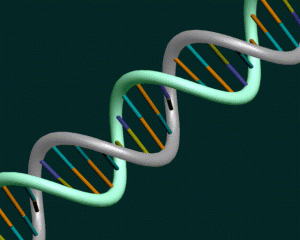
DNA, the genetic make-up of organisms contains the instructions for all facets of living things—how they look, how they behave, how the life process functions within, how they reproduce, their function and place in the web of life, and their natural strengths and weaknesses.

All living things are creations of God and as such were created in a specific fashion, for a specific reason, and made to function a certain way in the broader scope of the interconnected ecosystem. Even the weaknesses and limitations of an organism were intentional in order for the organism to best serve its purpose in the global ecology.

Our understanding of the connections between members of the community of life on earth is extremely limited at best, and perhaps more accurately all but non-existent. Our tiny brains cannot begin to comprehend the complexity, interconnectedness, and perfection of creation.

We have proven our ignorance and irresponsibility repeatedly by upsets we have caused in the environment and ecosystem through pollution and by bringing some organisms to extinction, and introducing others to environments where they do not belong. We have raised animals in unnaturally large numbers to feed our appetite resulting in environmental damage such as global warming and health risks such as antibiotic resistant bacterial strains.

The above have occurred primarily due to ignorance, and denial of any negative effects or connections. However, genetic engineering seeks to actually change or modify God’s work. It assumes that we know how to make God’s creations better. This is beyond arrogance and must be an affront to God.

Some might argue that it is acceptable to do genetic engineering because God gave us the intelligence to figure out how to do it. As long as it is used for good, it should not be offensive to Him.

But this misses the point. God gave us intelligence, reason, and conscience so that we can distinguish right from wrong, and recognize the risks and potential consequences of our actions.

In the case of GM plants, where is the good in exposing people to poisons and carcinogens and making them sick? Where is the good in dumping large amounts of herbicides into the environment? Where is the good in an engineered plant whose pollen can be transmitted to native plants by the wind and insects converting them to GMOs and possibly making the native plants extinct? Where is the good in producing genetically altered plants that we may have great difficulty controlling or eliminating (due to herbicide resistance) if we subsequently find them to be a threat to our survival?

This series of articles has attempted to demonstrate that there are serious consequences to producing GM plants from an environmental, human, and spiritual perspective. Companies such as Monsanto that produce and sell GM plants and the herbicides used to farm them continue to deny any dangers and rely on the public’s uninformed or passive acquiescence.

The tragedy is that the greed and irresponsible actions of a few have far-reaching implications for the rest of us and for the planet. We must take action to preserve and protect the natural, God-given make up of all living organisms, and maintain the natural order of the ecosystem. We must protect our families from harm by those who would seek to circumvent nature’s checks and balances for personal gain.

For related articles see:

Nature: A More Expansive Spirituality

An Impediment to Our Spiritual Evolution


GMOs (genetically modified organisms) Part 2 – How to Avoid Them in Your Diet

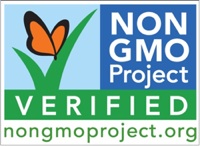
NonGMO Project Logo

This week’s article discusses how to avoid GM (genetically modified) foods in your diet. Last week described the most common types of modifications introduced into GM food crops and their health risks.

If you are concerned about the safety of GMOs, how can GMO-containing foods be identified? The short answer is that they generally cannot be identified because there is no law requiring producers to label GMO-containing food products. By all accounts, GM foods are very widespread in the US food supply. If you read the ingredients on packaged and processed food products, you will find that most contain soy and/or corn or their derivatives among other GM foods.

Given that 88 percent of corn and 94 percent of soy are from GM plants, then one might have to stop eating many of the processed and packaged foods to avoid GMOs. Packaged and processed foods are a way of life for the majority of people these days because of their convenience.

Consequently, avoiding GMOs may be a tall order that may be difficult for many. It requires discipline and a strong commitment. Considering the fact that your health and that of your children may be at stake, it is worth the sacrifice?

If certain GM foods, especially corn and soy, are ubiquitous and unlabeled, then how can they be avoided? The answer is to look for foods that are labeled to indicate that they do not contain GMOs. However, there are only two such labels of which I am aware that are reliable. They are described below.

Organic Logo  The simplest approach to avoiding GMOs is to eat only organic foods and food products. Part of the USDA criteria for labeling a food as organic is that it must not contain GMO ingredients. In other words, the seal at left means the food is not GMO. Preparing your own meals with organic ingredients is the best way to assure that you are eating safe, chemical-free foods.

For a more detailed explanation of the USDA organic label, as well as other labels that are, and are not, regulated by the USDA go here.

Fresh produce in the US often has a little sticker or bundle band with a number on it. The first digit of the number allows you to determine whether or not the fruit or vegetable is organic. A number beginning with nine is organic. However, these stickers do not allow one to determine if non-organic foods are GMO. This is something that must change.

Food brands that are not organic but made with nonGMO ingredients can be identified by the NonGMO Project logo shown at the beginning of this article. The NonGMO Project provides an independent assessment of foods for the presence of GMOs. On their web site, you can search specific brand names to see which products have been verified as free of GMOs.

In addition to organic fresh and frozen produce, there is a wide variety of organic prepared foods available. You can download a nonGMO shopping guide for your computer and an app for your smart phone at the following link: http://nongmoshoppingguide.com/ . The shopping guide provides the same listing as the nonGMO Project web site of brand names offering one or more products that have been verified to be GMO-free. When shopping you still need to look for the USDA organic seal or the nonGMO Project logo since not all products from some brand names are nonGMO.

There is another problem developing as a result of the growing demand for nonGM food products that needs to be addressed. Companies wanting to convert their products to nonGMO are finding it difficult to find sufficient sources of nonGM food crops, especially corn and soy. The organic farming industry currently caters primarily to individuals.

The number and size of farms growing GM crops exceeds the number and acreage of organic and nonGMO farms by a huge margin. It was estimated in 2009 that only 0.9 percent of the farmland acreage worldwide used organic farming methods. This means that organic crops are in relatively limited supply. This will become a more and more serious problem as the demand for nonGMO foods grows in response to rejection of GMOs by the public.

The increasing demand for nonGMO foods provides an opportunity for farmers to get out in front of this issue by abandoning GMO farming and returning to traditional, more eco-friendly farming methods, especially organic cultivation. Although profits may go down some in the short term as a result, farmers who make the change will have the peace of mind and satisfaction that they are doing what is right and not hurting people or animals that consume their products.

Organic farming methods are earth-friendly in part because they use naturally occurring fertilizers and pesticides rather than chemically produced and formulated compounds that pollute and poison. A Google search provides a plethora of information about organic farming methods and benefits for those interested in the topic.

Applying the above methods to identify nonGMO foods may require some changes in how and where you shop for food for your family. However, the extra effort will be worth it in the long run. You will have greatly reduced exposure of your family to potentially harmful chemicals, and if you choose to go organic, you will have also reduced harm to the broader ecosystem and the planet. Over time, I hope to see greedy and irresponsible companies like Monsanto put in check by the caring and responsible actions of the public.

Part 3 of the series on GMOs will examine some environmental and spiritual factors.

GMOs (genetically modified organisms) Part 1 – What Are They and What’s All the Fuss?

Credit: dna-footprints.com

Credit: dna-footprints.com

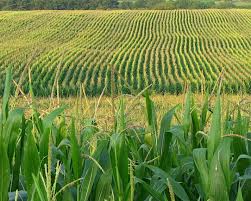
There is a major health and environmental threat that too many, at least in the US, know little about. I am referring to GMOs (genetically modified organisms), specifically food crops and food products.

Genetic engineering in general, including the production of GM (genetically modified) plants involves altering the genome, the DNA of an organism, by introducing foreign genes and/or amplifying existing genes. The process is imprecise, irreversible, and oftentimes causes unexpected results. The most common strategy involves introducing or amplifying genes that produce high levels of pesticides inside the plant cells, and others that confer the plant with a high resistance to external application of herbicides.

As a scientist, and perhaps to those who have an affinity for technology, the idea of altering the genes of food crops to increase productivity sounds appealing. However, the theoretical appeal quickly dims when you dig deeper into the gene modification process, its risks, and its potential consequences.

The theoretical rationale for genetic engineering research includes seeking to improve health and quality of life and improving productivity in the cultivation of food crops to increase the food supply. Superficially, this sounds good, but what is the down side? First, the genetic modifications have not resulted in increased crop yields. Second, the GM crops and food products you eat contain unnaturally high levels of the plant pesticides and herbicides. Finally, the purpose of conferring the GM plants with resistance to herbicides (commonly referred to as Roudup Ready plants) is so that large amounts that will kill normal, unmodified crops, can be applied to reduce or eliminate competition by weeds more effectively. This means that high concentrations of herbicides are being introduced into the environment and affecting our water supply, the soil, and other organisms that come in contact with them.

Further, the GM, Roundup-ready plants have been shown to have elevated levels of the herbicide inside the plant tissues. In addition, if the herbicides are not thoroughly removed from the surface of GM crops during processing, then we are ingesting even more of the chemicals. How many of us would knowingly eat pesticides and herbicides or feed them to our children?

As was the case for cigarettes for decades, Monsanto, and other companies that engineer and sell GM plants and the herbicides used to farm them, say they are safe with little research to back up such claims. In fact, there is growing evidence to the contrary. An overview of the potential health risks associated with the farming of GM crops can be found here .  A database of research studies and articles can be found here.

A life span study in mice who were fed a diet containing approximately 11-30 percent GM corn found high frequencies of premature death, breast cancer, liver and kidney damage, and a transgenerational reduction in fertility (a separate, more recent confirmatory study in rats can be found here). The findings of the original life span study in mice have been challenged as have short term (90 day) studies by the genetic engineering companies that suggest GMOs are safe.

We know from the tobacco story that 90 days is not nearly enough to reveal harmful effects of exposure to carcinogens. Yet, 90 days of exposure is all that is required by the FDA in order for approval to be given. However, the pesticides and herbicides associated with farming GM crops are known poisons and carcinogens; shouldn’t that raise a red flag and demand more extensive study?

There is an expanding variety of GM food crops currently on the market, including crops such as soy, corn, potatoes, cotton (oil), canola (oil), sugar from sugar beets, zucchini, yellow squash, Hawaiian papaya, and alfalfa among others. To determine whether or not specific plants/crops have been genetically altered and approved for sale, see the database found here.

It is estimated that approximately 75 percent of all corn and 95 percent of soy found in foods today in the US is GM. Both of these are ubiquitous in processed and prepared food products in this country. They are also widely used as feeds for meat and dairy animals.

Some countries in Europe have banned GM produce and food products. In the US there is a strong lobby by the chemical and genetic engineering companies against simply labeling GM foods. A lot more research is needed, especially long term studies to adequately assess the health risks of GMOs. For my own part, I am not waiting. I reject GM food sources from a scientific, health, and spiritual perspective.

Part two of this topic will address how to avoid GM foods.

Charity Doth Call My Spirit Forth

imagesNCSC76AN

Charity that comes from the heart is an act of love and compassion where the spirit reveals itself in all of its divine glory. It raises us up ever so slightly so that our feet seem to lose touch with the ground, if only briefly. With each charitable act, a wave of happiness and fulfillment washes over us and for those few moments, we understand the meaning and purpose of life. We realize that our joy comes from giving of ourselves—our spirit selves—to others.

But too often these moments are fleeting. When our feet touch the ground again, we find ourselves yearning to soar once more, free of the constraints, obligations, and selfish desires of the physical life. But it is not our time to fly away just yet. We must prove ourselves worthy of wings.

It is my belief that charity is a human and spiritual responsibility. We must strive to make charity a central part of our everyday life. Charity is an important way that we can express our spirit or spirituality. In its pure form it is an act of unselfish love and compassion with no expectation or desire for material gain or recognition.

If you make a big deal about how much you contribute to charity or about things you do to help others, you seek to raise yourself up in the eyes of others. On the other hand, if you are humble and your charity is motivated only by genuine caring for others, you raise yourself up in the eyes of God.

The charity of a spiritual person is generally done privately and seen only by those they are helping, or by the charitable foundation receiving their donations. That is to say, they do it because they see people in need and they know the right thing to do is help if they can.

Eulogy on the Demise of Character

The Generation of Character Source: Family Archives, circa 1944

The Generation of Character
Source: Family Archives, circa 1944

There was a time when the social, economic, and political currency was character. What I mean by a person of character is one who exhibits honesty, integrity, courage, and ethical behavior. How many people do you know who consistently display these attributes? Sadly, it seems they are rather scarce these days.

I knew such a person. My father who recently passed away was such a man. He was a member of the so-called ”Greatest Generation.” They were the people who grew up during the Great Depression and went on to fight in World War II. One of the hallmarks of the majority of that generation was steadfast honesty in business dealings as well as interpersonal interactions. I prefer to call them the Generation of Character.

My father was the most honest person I have ever known. He had his own business and had a reputation for honesty and integrity. He charged only what a job actually cost in terms of material and labor. He took pride in his work and used only materials of the highest quality. His profit margin was small, and his word was his bond. Moreover, he did his best to hold others to a similar standard when they provided business services or products to him.

He didn’t make a lot of money, and never had or asked for a lot. Yet, he was quite content knowing that he did his best to always do the right thing in every situation. The high road came naturally to him, so there was never a dilemma concerning which path to follow. He wasn’t perfect, but he got the important stuff right.

As far as I can tell, character was the mind-set of many members of the Greatest Generation—soon to be extinct. The depression and the war taught many of them humility and that God can take away all that we have at any time. It taught them to treasure family and friends, because they are with us for an indeterminant, and sometimes painfully short period of time.

For my own part, I lament, not only the loss of my father, but also the loss of character in so many members of contemporary society. What descriptor will historians use to characterize the present generations? What legacy of lifestyle will they (we) leave for future generations? Can character ever again dominate the human psyche and way of life of the majority?

We Exist in the Ethereal Spaces Between the Atoms

We Exist in the Ethereal Spaces Between the Atoms Copyright 2013 by Blair Atherton

We Exist in the Ethereal Spaces Between the Atoms
Copyright 2013 by Blair Atherton

As noted in my book and in previous blog articles, I believe that our true life is one of spirit. That is why I promote the idea of living a life of spirit rather than one anchored in the physical world.

We were created in spirit and will remain so forever more. Our spiritual existence does not stop or go into abeyance during the brief periods when we are clothed with a physical body. We may lose touch with our spirit-self from time to time, stupefied by the many distractions of the physical world.

But in the background, out of the din, our spirit cries out for expression. The challenge is to have the presence of mind and desire to hear it.

Our spirit calls to us with the sweet, soft voice of a lover, to remind us that we exist in the ethereal spaces between the atoms of the physical world. We are merely passers by and should consider what spiritual legacy we wish to leave behind in the physical world, because that is the only thing that will follow us when it is time move on.

While all that is composed will eventually be decomposed, our spirits will continue to exist as a part of our everlasting Creator. Just as He has always existed and always will, so shall we.

Note: The last paragraph above relates to my blog article of August 2, 2013 titled All That Is Composed Shall Be Decomposed.

Prayer: Spiritual or Self-Serving?

Lord, please hear my prayer! Copyright 2008 by Blair Atherton

Lord, please hear my prayer!
Copyright 2008 by Blair Atherton

Prayer, for most of us, is the primary means by which we communicate with God. The question is: what should we be saying when “speaking” with Him?

It seems that many who pray use it mostly to ask for things they want, even though God has already provided what they need. This is in keeping with the self-centered, materialistic mind-set of society today.

Why should one ask for more than they need when there are so many around the world who are barely able to scratch out the most basic existence? To ask for more when we already have enough, may be offensive to God. He has a life plan for each of us and He will provide precisely what we need to support that life plan and the service to which we have been called.

I question the value of saying prayers prescribed by a religion in a long chain over and over again. The repetitive nature of this form of prayer can quickly make the process one of a mindless drone. If the first repetition was said from the heart with sincere and conscious intent, then enough said.

Saying the same prayer again and again is not likely to give it greater force. In fact, it may even have a negative effect. Who wants to hear the same thing over and over? Soon one stops listening. When you say a single prayer with all of your heart and soul, it will be heard throughout all of the heavenly spheres with clarity and power.

And praying should not be restricted to time spent at one’s place of worship. Prayer should be an ongoing, frequent, daily practice said anywhere at any time. This is especially true for prayers of thanks. As a continuous process, prayer is a spiritual presence of mind where one is always aware of the presence of God in all things.

We should not make “promises” to God such that if He gives us X, then we promise to change our ways or do Y. Instead, we should attend to how we live on a daily basis, and always treat others with kindness. Then we will be rewarded without asking.

We are all human with limited ability to protect ourselves from harm and to cope with pain and suffering. If we find ourselves in a dangerous situation, or we suffer from some malady, prayer can often bring the help and strength we need to endure.

When we ask for material things for ourselves, prayer becomes a hollow self-serving exercise that may fall upon deaf ears. However, prayer becomes an expression of our spirit when we use it to give thanks for what God has chosen to give us, to ask for help for others, and to seek guidance concerning how we can be better human beings.

What is Spiritual Awareness?

And My light rose up... Copyright 2008 by Blair Atherton

And My light rose up…
Copyright 2008 by Blair Atherton

My personal spiritual experiences have led me to view what we mean by spiritual awareness differently than many people. Perhaps the most common and basic concept of spiritual awareness is simply an awareness of, or belief in, a higher being. I see this as a very limited and somewhat passive perspective.

My view of spiritual awareness is much more expansive and active. As discussed last week, this awareness most often begins with a belief in God, but spiritual awareness is not a belief, it is an experience.

As one’s spiritual awareness expands beyond basic belief, things happen. One begins to have inspirations and revelations. New knowledge and/or understanding blossom within us. Sometimes knowledge we already had springs forth with a new perspective, or takes on a deeper meaning and significance. This new meaning sometimes compels us to take action of some sort.

Expanding spiritual awareness and knowledge often bring with them new responsibilities that may require personal sacrifices. An example from my own spiritual evolution was the realization and belief that it is wrong to raise animals for food. This grew out of my expanding spiritual understanding of how all life forms are interconnected with each other and with the Source.

I took responsibility for this revelation by committing to vegetarianism and I am now a staunch supporter of animal rights. As one acquires more spiritual knowledge, one must adapt their thinking and behavior to reflect that knowledge. This is why I refer to spirituality as a developmental or evolutionary process.

To experience a more expansive spiritual awareness, we must truly open our minds and put aside any preconceived notions and prejudices. If we want to experience deeper levels of spiritual awareness, all we need do is ask, but we must be willing to change in response to the spiritual knowledge and understanding we receive.

Faith and Spiritual Awareness

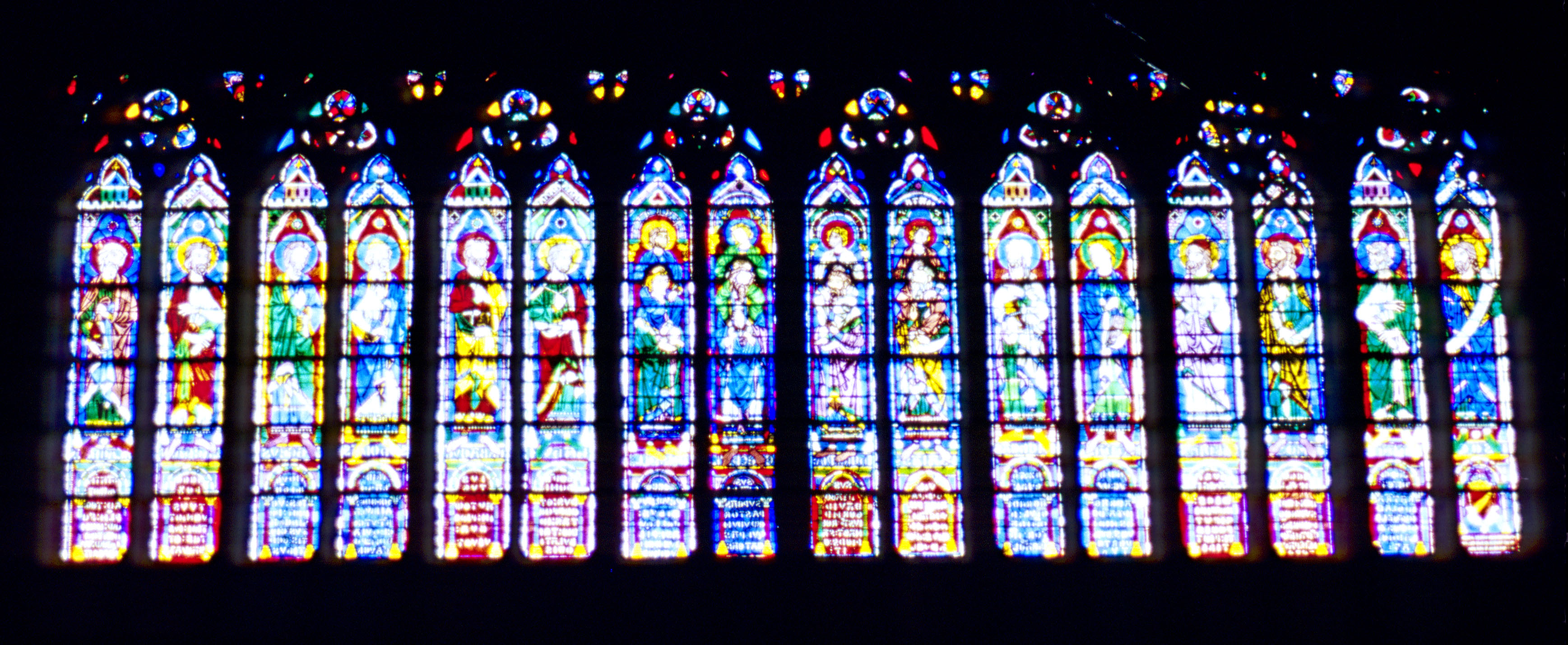
The Sixteen Prophets, Notre Dame Cathedral, Paris, France. Copyright 2000 by Blair Atherton

The Sixteen Prophets, Notre Dame Cathedral, Paris, France. Copyright 2000 by Blair Atherton

Are faith and spiritual awareness the same thing? This is an interesting question and no doubt there are many different views concerning the answer.

In thinking about this in the context of my own religious and spiritual experiences, I am of the belief that they are not the same. I see faith as a doorway or threshold through which most people must pass in order to begin a path to spiritual awareness. There are exceptions to this, but for most of us faith in a higher being is a necessary first step.

At the same time, simply believing in God is not sufficient for becoming spiritually aware. If we think about it, we realize that we know many people who participate in the rituals of organized religion but show no signs of spiritual awareness. When they walk out the door of their place of worship they leave God behind and return to their often self-centered and materialistic lifestyle. This can also apply to those who believe in God, but do not participate in organized religion.

In contrast, those with spiritual awareness see the world very differently. They see God in everything around them. They feel his presence every minute of every day. They constantly give Him thanks and praise, and they make a very conscious effort to live a life of goodness. They hold themselves accountable for their mistakes, wrong-doing, and transgressions, and they have genuine repentance.

Living a spiritually aware life may be a paradigm shift for many. Nevertheless, once having found the doorway to a spiritual life, do not be afraid to pass through. Keep an open mind and be prepared to make sacrifices and take on new responsibilities inherent in the knowledge you will receive.