If we were having coffee my love, I would sit next to you and tell you how much I have missed you. I have many questions, but seeing you now, they just don’t matter.
All I want to do is hold you and kiss your mouth, your cheek, your hands…your wrists….I want to run my fingers through your hair ever so gently and just take in the moment of seeing your beautiful face after such a long time.
My heart is pounding as a love suppressed for far too long awakens from a seemingly endless winter upon seeing the beautiful spring of my one true love again. I have so much to say; so much to tell you. But I find myself in a whirlwind of emotions…The only words that emerge from the storm—the only words that matter are—“I love you so very much.”
Do genetically modified food crops present a clear and present danger? New research and common sense suggest the affirmative.
There appears to be much controversy concerning health safety issues surrounding the farming of genetically modified (GM) food crops and its impact on public health. Recent research reviewed below indicates that significant health risks associated with GM crops do in fact exist. In my view, the so-called controversy is actually a public relations campaign especially by Monsanto to deceive the public, legislators, and regulators into thinking that GM crops and the methods to farm them present no health threat.
The chemical industry, which now often includes a biotechnology component, has a long history of misleading the public and regulatory bodies concerning the dangers of their products. There are many cases of cover-ups and misinformation ultimately followed by the banning or very tight regulation of some of their products. For example, DDT, PCBs, and Agent Orange (which contains dioxin and 2,4-D) come to mind.
What is happening concerning the “controversy” surrounding the farming of GM crops has some remarkable parallels with the behavior of the tobacco industry when data began to appear suggesting a link to lung cancer. What happened in the tobacco industry is recounted in an article by Robert N. Proctor, Ph.D. at Stanford University titled “The history of the discovery of the cigarette–lung cancer link: evidentiary traditions, corporate denial, global toll” cited below.
Today it is well known and accepted that lung cancer is caused by smoking tobacco. That this might be the case was first proposed in the late 1800’s. By the end of the 1950’s evidence for a link between cigarette smoking and lung cancer was definitively proven by multiple and diverse sources of evidence, including epidemiology studies, animal research, studies of cell pathology in smokers, and identification of cancer-causing chemicals in cigarette smoke. However, it was not until 1964 that the Surgeon General formally declared that cigarettes cause lung cancer.
Before and after the Surgeon General’s report on smoking, the tobacco industry denied any link between cigarette smoking and lung cancer. The industry developed marketing campaigns to confuse the public and make it appear that the link between tobacco and cancer was still controversial when it was not.
These sorts of tactics are used by the chemical/biotech industry today with regard to the safety of GM crops and the herbicides and pesticides used with them. Monsanto is one of the largest producers of GM crop seeds and herbicides used in farming. The industry relies on the ignorance of the public and puts up smoke screens to confuse those who express safety concerns. Contrary to Monsanto’s propaganda, GM crops do not offer any altruistic redeeming qualities.
As I see it, there are two aspects to issues of health safety surrounding GM food crops: (1.) potential dangers imposed by eating the plants themselves and (2.) dangers arising from the herbicides and pesticides used to farm them. GM crops present their own set of health risks that I discussed in a previous article on this topic.
Monsanto likes to focus the discussion on the safety of the GM crops because it is easy for the public and regulators to accept the notion for example that GM corn or soy are really not noticeably different from the native plants. They both look and taste the same. However, they are not the same because the physiology of the GM plants has been altered through genetic engineering.
I believe that focusing on the plants is a ploy by Monsanto to distract attention from a more ominous, clear and present danger—the massive use of glyphosate, the herbicide in Roundup. Monsanto’s GM crops are called “Roundup Ready” because they were created to be resistant to large amounts of Roundup. This was done with the sole purpose of selling huge amounts of Roundup. Some non-corporate farmers do not realize that Roundup Ready crops are GM crops.
Epidemiology was key in the case of tobacco because prior to widespread smoking of cigarettes, lung cancer was virtually unknown. It was so rare that when a case was found, physicians and medical students would gather to see it because it might be a once in a lifetime opportunity.
The World Health Organization (WHO) recently announced that after review of available research on glyphosate that it is a probable cause of cancer in humans. The research accepted for review by the panel was vetted to assure that the authors had no conflicts of interest with industry and that the research was published in respected, peer-reviewed journals. The report includes glyphosate as well as other herbicides and pesticides.
The WHO announcement can be found here. Sources of the research findings included in the WHO panel’s review, some of which are summarized in the next two paragraphs, are reviewed in the WHO report published in the Lancet Oncology which can be found here and reviewed comprehensively in the WHO monograph found here.
Examining disease incidence in potentially high risk populations such as farm hands and farm workers may have merit. Glyphosate was found in the blood and urine of agricultural workers. Case-controlled studies of occupational exposure to glyphosate in the US, Canada, and Sweden has shown an increased incidence of non-Hodgkin’s lymphoma. This approach has also found increased incidence of prostate cancer among agricultural workers exposed to other pesticides. Convincing evidence was also found that glyphosate can cause cancer in animals.
It is possible, as with tobacco, that a link could exist between some rare form of cancer and pesticides or GM crops. Animal studies in mice and rats found that glyphosate induced increased incidence of several cancers, including a rare renal tubule carcinoma. Others included pancreatic adenoma, haemangiosarcoma, and skin tumors. Glyphosate was also shown to induce DNA and chromosomal damage in mammals and in human and animal cells in vitro. Such damage can trigger cancer.
Huge amounts of Roundup are used in the farming of GM crops. According to the Organic Consumer’s Association there are a number of studies suggesting links between glyphosate and a wide variety of diseases and health problems. The article found here summarizes the findings.
If you are wondering whether pesticides used in the farming of conventional and GM food crops actually get into our bodies when we eat these foods, take a look at the short video below.
This pilot study in Sweden clearly shows that we ingest and absorb pesticides into the blood, which find their way to the urine, when eating non-organic (i.e., conventional and GM crops) foods. These days, at least in the US, that means a lot of GM crops. The study tested for insecticides, fungicides, and herbicides, such as 2,4-D but not glyphosate. I have no doubt that high levels of glyphosate would have also been found in this pilot as in other studies.
Glyphosate and 2,4-D are the most widely used herbicides in the US. Both are toxic and carcinogenic. The discussion of GM crops focuses too much on the crops and not enough on the fact that farming of conventional and especially GMO crops results in the deposition of large amounts of pesticides and herbicides on the crops and into the environment. This leads to higher residues in and on the crops we eat. Organic farming does not use the above mentioned herbicides. Organic foods are a bit more expensive, especially for large families, but what is the health of your family worth?
In my view, reason and caution trump the so-called “controversy” promoted by the chemical and biotech industries, especially Monsanto. It seems to me that it is only common sense that chemicals that poison plants, fungi, insects, mice, and rats are also poisonous to humans. Bear in mind that in order for toxins such as herbicides and widely used neonicotinoid insecticides to work, they are absorbed into the plant’s tissues. This means that they cannot be removed by washing the plant before consumption.
The fact is, we don’t know with any certainty what levels of these poisons will produce health problems in humans. There needs to be more research in this area. Just because a clear link between pesticides used in farming and cancer or other diseases in humans has not been definitively shown yet, does not mean that they are harmless. The results of animal studies clearly say otherwise.
The creation of herbicide-resistant GM crops by Monsanto provided the springboard for its billion dollar sales of Roundup worldwide. If the public rejects GM crops, then sales of Roundup will drop dramatically, along with the threat it poses to human health and the environment.
It is time for governments and regulators to discharge their responsibility to protect the public health and environment. It is also time for the public to relentlessly apply pressure every way they can to get GM foods labeled and to push for a ban or tight restrictions on the use of glyphosate and other herbicides and pesticides shown to cause cancer and other health problems in animals and/or humans. Genetically modified crops do indeed present a clear and present danger.
Proctor, Robert N. (2012). “The history of the discovery of the cigarette–lung cancer link: evidentiary traditions, corporate denial, global toll.” Tob Control 21:87-91. Available online at http://tobaccocontrol.bmj.com/content/21/2/87.full (Accessed November 8, 2015).
WHO Press release: IARC Monographs Volume 112: evaluation of five organophosphate insecticides and herbicides. International Agency for Research on Cancer, World Health Organization. March 20, 2015. Accessed online November 8, 2015, http://www.iarc.fr/en/media-centre/iarcnews/pdf/MonographVolume112.pdf
You might also like to see the following related articles published on this blog site:
How would you react to a diagnosis of terminal cancer? How would you choose to spend your last days on earth? Would you have regrets or would you look back on a life well-lived, satisfied that you helped as many people as you could? Would you rush out to do and get as many of the things of which you had been deprived, or would you instead reflect upon all that you had already been privileged to do and possess?
You may have heard that our 39th President Jimmie Carter was diagnosed with melanoma, a very aggressive cancer. If you did not see his press conference announcing the diagnosis, it can be found here.
President Carter said some remarkable things about how he is coping with his diagnosis that provides an example and model concerning how one who has a deep belief in God should react. He was totally at ease, relaxed, and smiling throughout the news conference. There was no discussion of doom and gloom, and no self pity.
He said that he was surprisingly at ease with the diagnosis and that he had had a wonderful life filled with many blessings. He was grateful for all the people he was able to help through the Carter Center and Habitat for Humanity.
He went on to say that he would accept whatever treatments are available but that he is in God’s hands. When asked what he would say to other cancer patients he said, “Hope for the best and accept whatever comes.” He said he was as blessed as much or more than any human being and that he was grateful and hopeful. He said that he is ready for whatever is next—the next great adventure.
Doris Kearns Goodwin a presidential historian said that “What we should remember about Jimmie Carter is that he was a good and decent man. In politics today we don’t often get good and decent men running for politics.”
President Carter provides an example of the kind of life we should all strive to emulate: a life of unwavering faith in God, honesty, acceptance of life’s trials, compassion and service to others, and gratitude for the many blessings we receive. May we all do our best to be good and decent human beings.
Information about the work of the Carter Center can be found here.
Have you ever wondered if there are other civilizations elsewhere in the Cosmos? Could we be but one civilization among billions? How likely is it that other intelligent life exists on other planets? What information is available for us to assess the likelihood that there are alien species?
The sheer immensity of the cosmos makes the notion of only one planet with a civilization seem absurd and provides strong impetus to the idea that surely there must be life elsewhere. Using a super computer, it has been estimated that there are between 300-500 billion galaxies. Astronomers estimate there are 70 billion trillion stars in the observable universe (i.e., 70,000,000,000,000,000,000,000 or 7 x 10²²). We do not know how many more may be beyond our ability to observe or detect.
These are some very big numbers that are really beyond our comprehension. Let us suppose that only one ten thousandth of a percent of all of the stars have a planet that could support some form of life. From this assumption we would estimate that there could be one thousand trillion planets in the universe (i.e., 7 followed by 16 zeros) that could support life.
Let us now suppose that only one millionth of these could have some form of intelligent life. If our assumption is correct, then we would estimate that at least one billion planets scattered about the universe could have intelligent life.
I find these numbers to be compelling concerning the likelihood that not only does life exist elsewhere in the universe, but that other civilizations do as well. If true, it is also likely that many are more advanced than us, not only technologically, but also spiritually. The earth and sun are much younger than planets and galaxies that are in the far distant universe whose light has reached us. Therefore, humankind could be on the less developed end of the spectrum.
Wherever humanity may fall in the evolutionary and spiritual hierarchy of the cosmos, there is no doubt that we have a long way to go on both developmental pathways. Spiritual evolution of a civilization is a very slow process, as is biological evolution. As I look down that long road ahead, I envision one people united in common cause for the loving care and respect for one another and for the planet that sustains them.
Now and then through history we have seen some remarkable and extraordinary individuals come forward to defend peace, harmony, and equality. Their light shines brightly and brings forth in us happiness and emotions that we often cannot explain and that may surprise and confound us.
One such beautiful light is Malala Yousafzai. She is the Pakistani girl who was shot in the head by the Taliban when she was only 14 years old because she spoke out about how Muslim women were being treated, and how girls were not allowed to go to school. The world was outraged and prayed for her survival and recovery. She not only recovered, but she recently won the Nobel Peace Prize at the age of 17. She shares the prize with Kailash Satyarthi of India who is also working for children’s rights.
Malala’s strength, courage, and conviction are an inspiration to us all. But why does she elicit such love and emotion in us? Perhaps she provides a glimpse into what a better world would look like—a world for which we all yearn and for which some dare to dream. One free of war and conflict, and the pain and suffering they bring. A world where peace, harmony, security, equality, and freedom are enjoyed by all of humanity.
Malala inspires us to not only dream of such a world, but to do whatever we can—no matter how small or seemingly insignificant—to move us toward it. The love the world has shown for Malala demonstrates that divine love is an integral part of our being and that it has great power to heal and unify us against evil and darkness. Malala’s light shines brightly and in doing so has not only enlightened us, but shows us that our own light can shine and have effect also.
There he lay on his death bed. He had a wonderful life of failure and triumph, sorrow and joy, as well as disappointment and blessings. As he reflected on his life, he began to have feelings of profound loss. Not because of regret or for the things that might have been, but because of having to leave behind those he loves.
He had said his difficult goodbyes to other members of the family. Only the youngest two members remained to be seen for the last time.
Saving them for last seemed apt: as one road comes to an end, another begins. It provided a reminder of just how far he had come from the innocence of childhood to the spiritual trials of adulthood, and finally to the enlightened end of a long life well lived.
As these thoughts washed through his mind, his two youngest grandchildren came into the room to visit. They were quite young—barely in grade school. They were too young to have a grasp of what it means to die. He struggled with how to tell them he was going to have to leave them.
“Come here you two. Get in the bed with me,” he said. “I was hoping you would come to see me today.”
The two of them, a boy and a girl, climbed up into the bed—one on each side—-and laid their heads on his chest. As they did this, a powerful wave of love welled up inside him and he had to force back the tears that strained to explode forth under the force of his emotions. He did not want to ruin these last moments with these two that he loved so much.
For a few minutes he could not speak. Then he said, “There is something I want the two of you to know. I love you both more than anything, but I must go away and I will not see you again for a long time. I don’t want to leave you, but sometimes we must do things that we would rather not do. I want you to know that when I am gone I continue to love you, just like you keep loving me when we are apart, right?”
In unison they said, “Yes grandpa.”
“Always remember the fun we had and how much I love you. While we are apart, you will be wrapped in a blanket of my love that will keep you warm and safe always. Does that sound good?”
“Yes grandpa,” they replied.
“But when will we see you again?” asked the little girl.
“I don’t know when you will see me, but I will always be with you because of the love that we have for each other.”
The little boy said, “I love you grandpa. I’m going to miss you.”
“Me too,” said the little girl.
“I can’t begin to tell you how much I am going to miss you guys. I will be watching over you from afar and I will always be with you in your hearts and minds, and you in mine.”
When the children left and the door closed behind them, he closed his eyes and drifted away. He left behind tears running down his check for the sorrow his departure will cause, and a bit of a smile on his face for finally getting it right.
Author’s note
This is a fictional dialogue. Although the story focuses on the little children, the sentiment expressed in the dialogue is meant to span all age groups.
Every now and then when I see a story about how we are gradually destroying our planet, I get a bit depressed. When I get angry about this issue I have been known to say that humanity is a destructive infestation of the planet that deserves to be removed so that the myriad other life forms will be left undisturbed to continue their evolution in peace. It is amazing how much destruction so few (humans) can do to the planet.
It seems that since time immemorial man has seen himself as above all other life. Perhaps the only superiority we can claim is intelligence. However, even that is questionable.
Look at all of the stupid things we have done that endanger, not only our existence, but that of all life on earth. Things like creating weapons of mass destruction, releasing toxic chemicals into the environment, putting chemicals in our food, pumping huge amounts of greenhouse gases into the environment while at the same time destroying forests around the world that can mitigate their effects on climate change. It was stupid and irresponsible to have done these things, and even more so for us to allow them to continue.
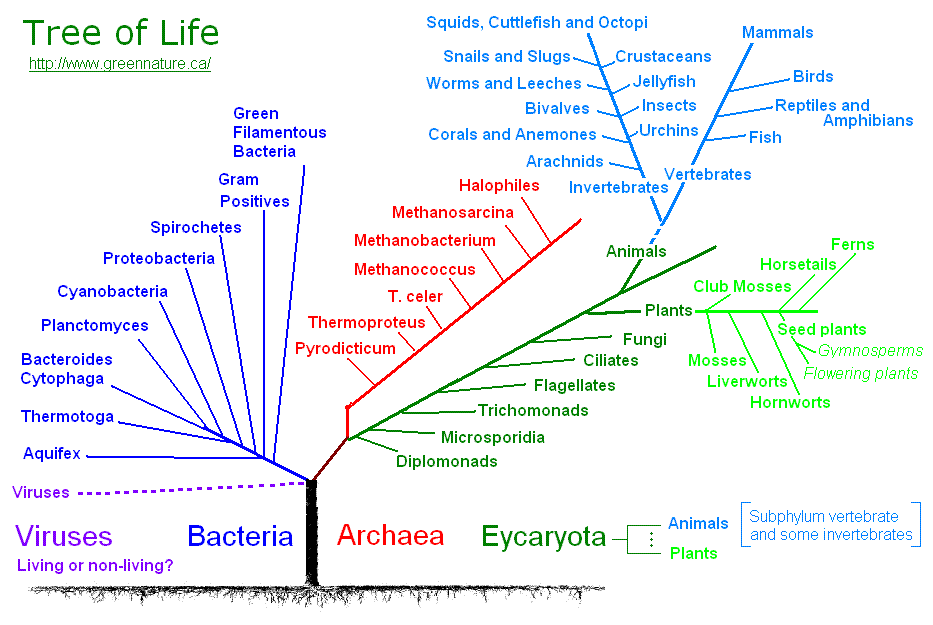
How is it that we believe we are the most important life form on earth with the most to contribute? We are but one species among millions of others. In terms of population (the total count of individual organisms), we are approximately seven billion among a non-comprehensive estimate of one million billion organisms including mammals, birds, fish, insects, and trees. This estimate is just a sampling and does not include all species in each category and does include reptiles, amphibians, invertebrates, other plants, fungi, protozoa, bacteria, and others. We have yet to identify all of the organisms on earth, and we do not understand the importance of the multitude of organisms in the web of life now, or as they continue to evolve over the millennia.
Because humans are by far the minority on this planet, we should bow down with humility before God and the throngs of life all around us that allow us to live among them, and give us sustenance. Surely other organisms have a right to live among us. After all, in reality, the earth belongs to them, not us—humans are a vanishingly small percentage of the world population of organisms. We have no right to alter the course of evolution or to destroy the earth’s natural ecology.
Other organisms are not here for us to exploit or exterminate. All members of the community of life rely on one another in countless, largely unknown ways. We should respect and care for all members of the community. Humans are not above nature; rather they are but one lineage among millions of others who came from the same Source. We embody but one of the many expressions of our Creator reflected in the diversity of life on earth.
Our intelligence and inherent sense of right and wrong should lead us to see ourselves as stewards of the earth and all living things. We should not presume that one life form (including our own) is more important than another. We have been given a sacred trust and responsibility to preserve and protect all life. By doing so, we show love and respect for the Creator of all things.
If we wish to claim a unique intelligence, then we must rise above our own selfish needs, cherish all life, and take responsibility as stewards and protectors of the earth. Only then can we hope to be the species most blessed by God.
References
Estimates concerning the number of species of plants, animals, fungi, and bacteria on earth range from 8-14 million. Approximately 15,000 new organisms are discovered each year. The New York Times article found here reviews the research behind these estimates.
Data used for aggregate estimates of the population of organisms can be found here
If health and safety are not reasons enough to do whatever is necessary to avoid potentially harmful GM (genetically modified) foods, then environmental and spiritual considerations may provide further impetus. There is a very real threat of GM crops cross pollenating and eventually eliminating unmodified conventional and organic crops. GMOs are already being found in unexpected places near and far from GMO farms (see this article in Scientific American). Also see section 5.11 of GMO Myths and Truths for many cases of GMO contamination of native fields and their economic impact.
Action needs to be taken to preserve and protect the genome of natural varieties of plants that were used for genetic modification before it is too late. Remember that the gene modifications in GMOs are irreversible. Should GM varieties eventually supplant the native species, it is unlikely that they can be reverse-engineered to restore the original, native genome of the plant.
DNA, the genetic make-up of organisms contains the instructions for all facets of living things—how they look, how they behave, how the life process functions within, how they reproduce, their function and place in the web of life, and their natural strengths and weaknesses.
All living things are creations of God and as such were created in a specific fashion, for a specific reason, and made to function a certain way in the broader scope of the interconnected ecosystem. Even the weaknesses and limitations of an organism were intentional in order for the organism to best serve its purpose in the global ecology.
Our understanding of the connections between members of the community of life on earth is extremely limited at best, and perhaps more accurately all but non-existent. Our tiny brains cannot begin to comprehend the complexity, interconnectedness, and perfection of creation.
We have proven our ignorance and irresponsibility repeatedly by upsets we have caused in the environment and ecosystem through pollution and by bringing some organisms to extinction, and introducing others to environments where they do not belong. We have raised animals in unnaturally large numbers to feed our appetite resulting in environmental damage such as global warming and health risks such as antibiotic resistant bacterial strains.
The above have occurred primarily due to ignorance, and denial of any negative effects or connections. However, genetic engineering seeks to actually change or modify God’s work. It assumes that we know how to make God’s creations better. This is beyond arrogance and must be an affront to God.
Some might argue that it is acceptable to do genetic engineering because God gave us the intelligence to figure out how to do it. As long as it is used for good, it should not be offensive to Him.
But this misses the point. God gave us intelligence, reason, and conscience so that we can distinguish right from wrong, and recognize the risks and potential consequences of our actions.
In the case of GM plants, where is the good in exposing people to poisons and carcinogens and making them sick? Where is the good in dumping large amounts of herbicides into the environment? Where is the good in an engineered plant whose pollen can be transmitted to native plants by the wind and insects converting them to GMOs and possibly making the native plants extinct? Where is the good in producing genetically altered plants that we may have great difficulty controlling or eliminating (due to herbicide resistance) if we subsequently find them to be a threat to our survival?
This series of articles has attempted to demonstrate that there are serious consequences to producing GM plants from an environmental, human, and spiritual perspective. Companies such as Monsanto that produce and sell GM plants and the herbicides used to farm them continue to deny any dangers and rely on the public’s uninformed or passive acquiescence.
The tragedy is that the greed and irresponsible actions of a few have far-reaching implications for the rest of us and for the planet. We must take action to preserve and protect the natural, God-given make up of all living organisms, and maintain the natural order of the ecosystem. We must protect our families from harm by those who would seek to circumvent nature’s checks and balances for personal gain.
This week’s article discusses how to avoid GM (genetically modified) foods in your diet. Last week described the most common types of modifications introduced into GM food crops and their health risks.
If you are concerned about the safety of GMOs, how can GMO-containing foods be identified? The short answer is that they generally cannot be identified because there is no law requiring producers to label GMO-containing food products. By all accounts, GM foods are very widespread in the US food supply. If you read the ingredients on packaged and processed food products, you will find that most contain soy and/or corn or their derivatives among other GM foods.
Given that 88 percent of corn and 94 percent of soy are from GM plants, then one might have to stop eating many of the processed and packaged foods to avoid GMOs. Packaged and processed foods are a way of life for the majority of people these days because of their convenience.
Consequently, avoiding GMOs may be a tall order that may be difficult for many. It requires discipline and a strong commitment. Considering the fact that your health and that of your children may be at stake, it is worth the sacrifice?
If certain GM foods, especially corn and soy, are ubiquitous and unlabeled, then how can they be avoided? The answer is to look for foods that are labeled to indicate that they do not contain GMOs. However, there are only two such labels of which I am aware that are reliable. They are described below.
The simplest approach to avoiding GMOs is to eat only organic foods and food products. Part of the USDA criteria for labeling a food as organic is that it must not contain GMO ingredients. In other words, the seal at left means the food is not GMO. Preparing your own meals with organic ingredients is the best way to assure that you are eating safe, chemical-free foods.
For a more detailed explanation of the USDA organic label, as well as other labels that are, and are not, regulated by the USDA go here.
Fresh produce in the US often has a little sticker or bundle band with a number on it. The first digit of the number allows you to determine whether or not the fruit or vegetable is organic. A number beginning with nine is organic. However, these stickers do not allow one to determine if non-organic foods are GMO. This is something that must change.
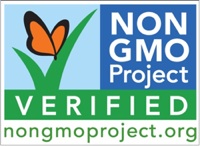
Food brands that are not organic but made with nonGMO ingredients can be identified by the NonGMO Project logo shown at the beginning of this article. The NonGMO Project provides an independent assessment of foods for the presence of GMOs. On their web site, you can search specific brand names to see which products have been verified as free of GMOs.
In addition to organic fresh and frozen produce, there is a wide variety of organic prepared foods available. You can download a nonGMO shopping guide for your computer and an app for your smart phone at the following link: http://nongmoshoppingguide.com/ . The shopping guide provides the same listing as the nonGMO Project web site of brand names offering one or more products that have been verified to be GMO-free. When shopping you still need to look for the USDA organic seal or the nonGMO Project logo since not all products from some brand names are nonGMO.
There is another problem developing as a result of the growing demand for nonGM food products that needs to be addressed. Companies wanting to convert their products to nonGMO are finding it difficult to find sufficient sources of nonGM food crops, especially corn and soy. The organic farming industry currently caters primarily to individuals.
The number and size of farms growing GM crops exceeds the number and acreage of organic and nonGMO farms by a huge margin. It was estimated in 2009 that only 0.9 percent of the farmland acreage worldwide used organic farming methods. This means that organic crops are in relatively limited supply. This will become a more and more serious problem as the demand for nonGMO foods grows in response to rejection of GMOs by the public.
The increasing demand for nonGMO foods provides an opportunity for farmers to get out in front of this issue by abandoning GMO farming and returning to traditional, more eco-friendly farming methods, especially organic cultivation. Although profits may go down some in the short term as a result, farmers who make the change will have the peace of mind and satisfaction that they are doing what is right and not hurting people or animals that consume their products.
Organic farming methods are earth-friendly in part because they use naturally occurring fertilizers and pesticides rather than chemically produced and formulated compounds that pollute and poison. A Google search provides a plethora of information about organic farming methods and benefits for those interested in the topic.
Applying the above methods to identify nonGMO foods may require some changes in how and where you shop for food for your family. However, the extra effort will be worth it in the long run. You will have greatly reduced exposure of your family to potentially harmful chemicals, and if you choose to go organic, you will have also reduced harm to the broader ecosystem and the planet. Over time, I hope to see greedy and irresponsible companies like Monsanto put in check by the caring and responsible actions of the public.
Part 3 of the series on GMOs will examine some environmental and spiritual factors.
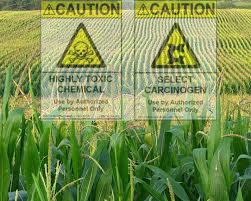
There is a major health and environmental threat that too many, at least in the US, know little about. I am referring to GMOs (genetically modified organisms), specifically food crops and food products.
Genetic engineering in general, including the production of GM (genetically modified) plants involves altering the genome, the DNA of an organism, by introducing foreign genes and/or amplifying existing genes. The process is imprecise, irreversible, and oftentimes causes unexpected results. The most common strategy involves introducing or amplifying genes that produce high levels of pesticides inside the plant cells, and others that confer the plant with a high resistance to external application of herbicides.
As a scientist, and perhaps to those who have an affinity for technology, the idea of altering the genes of food crops to increase productivity sounds appealing. However, the theoretical appeal quickly dims when you dig deeper into the gene modification process, its risks, and its potential consequences.
The theoretical rationale for genetic engineering research includes seeking to improve health and quality of life and improving productivity in the cultivation of food crops to increase the food supply. Superficially, this sounds good, but what is the down side? First, the genetic modifications have not resulted in increased crop yields. Second, the GM crops and food products you eat contain unnaturally high levels of the plant pesticides and herbicides. Finally, the purpose of conferring the GM plants with resistance to herbicides (commonly referred to as Roudup Ready plants) is so that large amounts that will kill normal, unmodified crops, can be applied to reduce or eliminate competition by weeds more effectively. This means that high concentrations of herbicides are being introduced into the environment and affecting our water supply, the soil, and other organisms that come in contact with them.
Further, the GM, Roundup-ready plants have been shown to have elevated levels of the herbicide inside the plant tissues. In addition, if the herbicides are not thoroughly removed from the surface of GM crops during processing, then we are ingesting even more of the chemicals. How many of us would knowingly eat pesticides and herbicides or feed them to our children?
As was the case for cigarettes for decades, Monsanto, and other companies that engineer and sell GM plants and the herbicides used to farm them, say they are safe with little research to back up such claims. In fact, there is growing evidence to the contrary. An overview of the potential health risks associated with the farming of GM crops can be found here . A database of research studies and articles can be found here.
A life span study in mice who were fed a diet containing approximately 11-30 percent GM corn found high frequencies of premature death, breast cancer, liver and kidney damage, and a transgenerational reduction in fertility (a separate, more recent confirmatory study in rats can be found here). The findings of the original life span study in mice have been challenged as have short term (90 day) studies by the genetic engineering companies that suggest GMOs are safe.
We know from the tobacco story that 90 days is not nearly enough to reveal harmful effects of exposure to carcinogens. Yet, 90 days of exposure is all that is required by the FDA in order for approval to be given. However, the pesticides and herbicides associated with farming GM crops are known poisons and carcinogens; shouldn’t that raise a red flag and demand more extensive study?
There is an expanding variety of GM food crops currently on the market, including crops such as soy, corn, potatoes, cotton (oil), canola (oil), sugar from sugar beets, zucchini, yellow squash, Hawaiian papaya, and alfalfa among others. To determine whether or not specific plants/crops have been genetically altered and approved for sale, see the database found here.
It is estimated that approximately 75 percent of all corn and 95 percent of soy found in foods today in the US is GM. Both of these are ubiquitous in processed and prepared food products in this country. They are also widely used as feeds for meat and dairy animals.
Some countries in Europe have banned GM produce and food products. In the US there is a strong lobby by the chemical and genetic engineering companies against simply labeling GM foods. A lot more research is needed, especially long term studies to adequately assess the health risks of GMOs. For my own part, I am not waiting. I reject GM food sources from a scientific, health, and spiritual perspective.
Part two of this topic will address how to avoid GM foods.







 Exploring Spirituality Beyond Religion
You must be logged in to post a comment.