My Companion and Me

From WallpaperUp.com

From WallpaperUp.com

“Are you feeling lost and downhearted,” he asked? “Come, take my hand and follow me. We have been strangers for too long. Do not be afraid.”

“Where are we going,” I asked?

“We are going where you have always yearned to go. Come I will show you the way. The path we will walk together can be difficult, but the destination well worth it.”

“This is too hard. I don’t think I can do it.“

“Of course you can! Focus on the light up ahead. It will give you strength. Don’t you see how it gets brighter the farther we go?”

“I didn’t realize how we were emerging from such a dark mist. As I look back down the path from where we came, I see that it fades into total darkness. I did not know how lost and confused I was back there.”

“We still have a long way to go, but I will be with you every step of the way. Just don’t let go of my hand or lose sight of the expanding light ahead.”

“As we continue to progress, I feel closer and closer to you.”

“I have always been a part of you waiting for you to take notice. Now that you have acknowledged me, we can continue the journey truly as one—fearless—with great strength and conviction.”

                                                                             *************
Jesus taught us that the Kingdom of God is within each of us, and it is realized through love, compassion, and forgiveness. Become one with your own divinity and show it to the world!

The Transformative Nature of Tragedy

From Wallpaper Up.com

From WallpaperUp.com

Traumatic events in our lives are usually the most transformative—whether it is nearly dying ourselves, the loss of a loved one, or some other calamity. It is sad that tragedy and heartbreak are often needed to initiate positive change in many of us.

These events may cause us to realize that we have been attracted to the neon lights of fame, fortune, and desire for far too long. We begin to see that the bright colors are artificial and without substance or spiritual quality. I believe that traumas can awaken us from a sleepwalk towards the spiritual desolation caused by a life driven by materialistic values rather than spiritual ones.

Tragedy often rekindles our compassion for others and expands our understanding of suffering. Traumatic events draw our spirit forth causing us to reach out to others, not so much to get support, as to give it. Not so much to grieve a loss, as to celebrate one life, and resolve to improve another (usually our own).

Our search for meaning in the loss of a loved one, more often than not, turns inward to seek how we can honor their memory, become better human beings, and truly live ourselves. These thoughts come, not so much from a fear of death, but rather to exalt life—to come to understand what is important in life, and in doing so, undergo a meaningful transformation for the better. The challenge is to integrate positive changes in us brought about by this transformation in a way that guides our lives continuously and irreversibly going forward.

The Meaning of Life and Other Age-Old Questions

There are a number of very basic questions concerning our existence that almost everyone asks at some point in their life. Things like why am I here? What is my purpose in life? What is the meaning of life? What is God’s plan? These are questions that mull over deep inside everyone of us even if they are never uttered, allowed to come to full consciousness, or faced with conviction to find the answers. Such questions are fundamental to the human condition.

Many seek answers, but fail to find them. Others do not know where to look. Still others do not recognize the answers when they find them because they seem too simple. There are also those who do not believe the answers when they find them because they do not trust the source.

The general life plan for all of us is a surprisingly simple one. It is governed by a set of very simple and basic laws. Like many readers, I sought answers in the scriptures of various religions. The answers are there, but often hard to clearly identify and organize into an easy to follow road map, because it is sometimes difficult to separate the wheat from the chaff.

There is a wonderful book that I would like to recommend to you that I believe may, at least for some of you, answer several of the questions above and a wide variety of questions relating to spirituality, the afterlife, and more. It is titled The Teachings of Silver Birch. Knowing the diversity of my readership, there will likely be a wide spectrum of views about the source of the teachings, as well as the their content.

The book is not based on religion, only on a belief in a higher being. Silver Birch speaks to us from the world of spirit and answers a wide variety of questions concerning spirituality in very simple and understandable terms.

Whether you believe in spirits and mediums or not, when you read this book, you likely will intuitively know that it speaks the truth. If you should be skeptical about the source of the knowledge that this book offers, I urge you to read the book anyway. It provides much food for thought.

You may come away amazed at how simple and clear God’s plan really is. Moreover, having read this book, if you go back to the scriptures, you will see many of the same teachings, but not so clearly stated.

If you find the book to be useful, then please share it and/or this article with others. After you have read the book, I would  very much like to hear your thoughts on its message, or how it impacted you.

The book can be purchased here. The description provided on the web site is lacking to say the least. Please rely on what I have told about the book to make your purchase decision.

I Am Spirit

The Hodge 301 Cluster in the Tarantula Nebula Credit: The Hubble Heritage Team (AURA/STSci/NASA)

The Hodge 301 Cluster in the Tarantula Nebula Credit: The Hubble Heritage Team (AURA/STSci/NASA)[/caption

I Am Spirit.
I have existed before time began
And I will exist after the end of time.

I am you and you are me.
I am a victim of doubt, skepticism, and ignorance.
I am present in bodies with minds that do not recognize me.

I give you life—yet, you do not truly live.
I am love—yet, you do not share me widely.

I am compassion—yet, you hide my light deep inside.
I am generous—yet, you do not give to those who are needy.

I give you knowledge, but you refuse to believe.
I show you the Path, but you turn away and choose another.
I provide good counsel, but you do not listen.

I Am Spirit.
I am you, and you are me.
One day you will awaken to me
And our glorious light will shine upon all the world!

Copyright 2014 by Blair Atherton

As with other spiritual verses I have published on this blog and elsewhere, I was compelled to sit in front of the computer and wait for the words to start flowing. The message here is clear: we must understand and believe that we exist as spirit, and not neglect or be afraid to express our divine qualities.

Nature’s Nurture Unleashed

Rainbow Chard Credit: http://sweetwater-organic.org/

Rainbow Chard Credit: http://sweetwater-organic.org/

Those of you who consistently follow this blog know that I am vegetarian. I will not recap here my reasons for becoming a vegetarian. What I would like to do is share with you a recipe that gave me an easy entry into getting my daily fruit and vegetables and eventually becoming a vegetarian.

The recipe below is for my green smoothie—so-called not so much for its color as for some of its ingredients. In fact, it starts out purple and after 15-30 minutes reverts to green.

Until I started having the smoothie every morning, I rarely ate vegetables or fruit in any quantity or with any regularity. Although odd to say for a vegetarian, I really don’t like vegetables, and have historically concentrated on the “meat and potatoes” of my evening meal up until my conversion.

Even though you may have no desire to become vegetarian, this smoothie is a very healthful whole food that allows you to get a big portion of your daily fruits and vegetables in one great tasting shot. This drink is (and must be) prepared in a high powered blender such as a Vitamix. There are a number of reasons for this. High power and high RPMs are needed not only to blast through frozen fruit (which will destroy a conventional blender), but also to break open the plant cells of the fruit and vegetables, release the contents of the cells, and reduce their components to subcellular and micron-sized particles.

Releasing the internal components of the cells gives our digestive system access to them. Chewing intact vegetables, whether cooked or uncooked, is very inefficient. Much of the nutrients they contain is not accessible, because we are unable to digest the plant’s cellulose cell walls. Heating helps but may inactivate important components. Using live, raw fruits and vegetables assures that all of the nutrients, vitamins, and antioxidants are preserved and not modified or inactivated by cooking.

I do not have data, but if I had to guess, I would say that chewing cooked or uncooked vegetables might release at best 20-30 percent of the nutrients, while high speed blending might release on the order of 90 percent. An implication of this is that the amount of nutrients derived from a relatively small amount of high speed-blended raw vegetables is comparable to a relatively large amount of intact vegetables. That is, you would have to eat three to four times more unblended vegetables to get the same amount of nutrients, antioxidants, etc. that are obtained from a given amount of high speed blended vegetables. That’s good for someone like me who doesn’t like vegetables to begin with.

Organic vegetables and fruit should be used to avoid or minimize herbicide, pesticide, and fertilizer residues found on conventionally grown crops. Conventional crops should be vigorously washed with a veggie wash detergent before use. Another benefit of using organic fruits and vegetables is that genetically modified plants are avoided.

For purposes of flavor and stability of the nutrients released from the cells, the smoothie must be ice-cold. This is most easily accomplished by using frozen fruit in the recipe. Otherwise, you will need to substitute one cup of ice for the water.

You may read other opinions, but I strongly recommend that the smoothie be consumed within 30 minutes. The shift in color of the smoothie from purple to green suggests that some oxidation is occurring. Once released from the cell, some of the components may be labile and lose potency with storage, even in the refrigerator.

Generally, the recipe below yields approximately a quart. I drink the whole thing, but you may choose to share it with another person. Some small high speed blenders are now available that make much smaller portions. However, I am not sure that the small volume produced will provide adequate daily amounts of nutrients and fiber.

Of course you are free to experiment with the ingredients, but I recommend that you start with my recipe first because I know it tastes good. Not all combinations of vegetables are pleasing to the taste, and not all are packed with nutrients like those below. If you want to try others, then change only one vegetable at a time in the recipe.

The Green Smoothie*

*My recipe is based on one originally developed more than five years ago by the Green Smoothie Girl as a healthy drink for her family. She has now established an online business selling a line of health products.

Blending times are for the Vitamix set to the highest speed.

PHASE 1

2/3 cup filtered or spring water
1/8 lemon (skin, pulp, and seeds included) thoroughly washed before cutting

Add the vegetables below in roughly equal amounts. Enough to loosely fill the blender jar. Tear the leaves into pieces as you might do for a salad. Depending on the size of the leaves, 1-2 leaves of each should be enough. All veggies should be organic.

Chard
Collard Greens
Kale (any variety or mix: green, red, black)
Curly or Italian parsley

Protein powder (equivalent to 20 grams of protein)
One banana, peeled

(optional) 1 tablespoon of whole chia seeds for extra fiber and omega 3.

Blend on high speed for approximately 45 seconds.

PHASE 2

Add the following to a one cup Pyrex measuring cup:

2/3 cup frozen organic blueberries
Then fill the remainder of the measuring cup with frozen mixed fruit.

Add the fruit to the jar with blended veggies and blend on high speed for 60 seconds. The consistency will be like a thick shake.

(optional) add your daily omega-3 supplement. I use the plant-based Vega Antioxidant Omega Oil Blend. It has the ideal ratio of omega-3 and omega-6.

Note: Do not blend longer than the times indicated, because longer time will cause heating of the mixture which may reduce potency.

Consume within 30 minutes.

Considerations for Choosing Other Varieties of Vegetables

While dark green leafy vegetables like kale and collard are staples for the smoothie, another goal is to introduce a variety of colors into the mix. This is desirable because the different colors reflect a wider array of antioxidants. Some antioxidants are more powerful than others and some plants provide better carriers for vitamins and other nutrients than others. Using a variety of fruits introduces color as well as vegetables like red, yellow, or rainbow chard and red kale.

It would be wise to look up the nutritional values of vegetables you are considering as additions or substitutes to the recipe. For example, the various types of lettuce offer much less than other choices. Beware of strong-tasting vegetables like mustard greens as these will dominate the taste. Bok choy, spinach, dandelion, and carrots are good variants to use periodically.

The Spiritual Mind

The Spiritual Mind Copyright by Blair Atherton 2014

The Spiritual Mind by Blair Atherton 2014

I believe that the mind has two aspects or qualities: spiritual and intellectual. We are all familiar with the intellectual mind. It is responsible for processes like reasoning, judgment, analysis, calculation, ego, desire, and other mundane faculties. I envision the spiritual mind engaging in activities such as creativity, intuition, and psychic abilities.

The two aspects of mind likely operate on different planes of consciousness. The intellectual mind (IM) focuses on the physical world, while the spiritual mind (SM) searches for meaning, and communion with God.

Worldly knowledge is acquired by the IM through study and investigation of measurable quantities. Spiritual knowledge can be obtained to some extent by study also. However, oftentimes, the most profound spiritual knowledge comes to us without active searching or any effort on our part except having an open mind and a desire to come closer to God.

Sometimes spiritual knowledge defies logic and ordinary understanding. It can come to us with an inexplicable certainty in its truth, while at the same time we do not how we know it or from where the knowledge came to us.

The two minds look at the world and existence quite differently. The IM primarily sees the here and now, while the SM senses there is much more to existence. Dominance by the IM may lead one to deny or overlook their spiritual nature. It may also lead one to question the existence of God or a Creator, as the IM favors (perhaps requires) measurement and proof over intuition and faith.

In contrast, the SM cares little about the material aspects of existence favoring instead expression of itself through inspiration, creativity, psychic connection, and emotions such as love and compassion.

How do the two aspects of mind reconcile with one another? The IM is essential in order for us to function in the material world. The SM brings meaning to the activities of the IM. The spiritual qualities of mentality moderate and guide the IM toward applications of its faculties that will be spiritually fulfilling and serve the greater good. I believe that a key element of our spiritual progression and evolution is for the SM to achieve dominance over the IM.

The Law of Service

The material world presents us with many challenges, not the least of which is maintaining awareness of our spiritual divinity and seeing opportunities for its expression. It’s so easy to get caught up in the day-to-day of work and family.

Although these things and more can provide fertile ground for learning, many of us may not realize that God has certain expectations of us—laws to govern and guide life in the material world and when we return to the world of spirit. An extremely important one is the Law of Service. It is through actuation of this law in our lives that we express our spirit and evolve. I believe it to be a requirement for progression to higher spiritual planes.

How many people do you know who engage regularly in some form of service to others? In this day and age, it seems like many of us are too engrossed in our personal lives and the quest for fame, fortune, love, or whatever else to even think about helping others. As a consequence, we miss out on one of the most rewarding things in life—helping others through service.

The Law of Service is inherent in the commandment “Thou shalt love thy neighbor as thyself.” Jesus said this commandment of brotherly love is second only to “Thou shalt love the Lord thy God with all thy heart, and with all thy soul, and with all thy mind.” In fact, if you believe that each of us is a part of God, then to love others is to love God and vice versa. Consequently, it could be said that the two commandments are simply different expressions of the same spiritual law.

We have a spiritual kinship with all of humanity. Therefore, people locally and around the world are our neighbors. We are expected to love them all, and in so doing, to provide service and help to anyone who needs it. Unselfish service to others is the single most important thing we can do to change the world.

Exploring Spirituality Beyond the Confines of Religion

For the last ten months, the tag line for this blog was Exploring What It Means to be a Spiritual Person. That topic remains relevant to past and future content.

The tag line was changed to the title above in the hope of clarifying that the articles then and now, are presented for the benefit of both those who participate in a religion and those who do not. As time has passed, it became clear that this blog may provide a refuge for thought, reflection, and inspiration for people with very diverse views of religion and spirituality, including the growing number of people who have abandoned participation in the rituals of their faith, and/or who have come to question some of the doctrines of their religion.

I was raised Catholic, but in young adulthood left the church to strike a path free of religious doctrine and ritual choosing instead to seek what I believed to be a more free and pure spirituality. At the same time, I never abandoned or doubted my belief in a Creator.

After leaving the church, my relationship with God continued to strengthened and my spiritual awareness expanded greatly unfettered by the restrictions and synoptic vision of the church. I did a brief survey of world religions, not looking for a new home, but to expose myself to different ways of looking at the nature of God and our existence.

One of the goals of this blog is to identify the basic elements of spirituality without regard to religion and to seek ways to apply these in everyday life. I would leave modes of worship or ritual (if any) to the individual whether it should include attending religious services or not.

What is discussed here is presented with the hope that anyone reading the articles will benefit in some way. My intent is to provide discussion and ideas for reflection in simple language that is easily understood and, when appropriate to the topic, actionable.

If you are new to this blog, then I invite you to peruse the array of short articles in the archives which attempt to identify the various facets of what it means to be a spiritual person. The collection represents a very personal exploration of my own spirituality and how it relates to the world as a whole. I hope that you will choose to join me in my quest for deeper understanding of the meaning of life, and an expansion of spiritual awareness.

What is Salvation?

Autumn Reflections Copyright 2008 by Blair Atherton

Autumn Reflections Copyright 2008 by Blair Atherton

What is salvation? What does it mean to be saved? Indeed how is one saved?

To the best of my knowledge, the idea of salvation through faith came from the early Christian church. It appears to be a purely Christian idea. There are a number of different interpretations of what salvation means. Perhaps the most popular view is that Jesus, through his suffering and death, saved us from punishment by God for our sins. An extension of this in some Christian sects is that one can be saved only through faith in Jesus the Savior.

My concern about such beliefs is that some people, believing that they are assured of salvation by their faith, might consciously or subconsciously begin to think that how they live their life is not so important. Salvation by faith in Christ also implies exclusivity and favoritism of one group over another by God. This is not logical; God loves all of His children.

The above view of “salvation” would seem to relieve believers from accountability for their actions through intervention by someone or some thing outside of themselves. Consequently, there would be no need for one to take responsibility for wrongdoing because they would be forgiven by virtue of their religious faith.

This does not withstand the test of reason, because it suggests that it doesn’t matter what one may do since salvation would avoid retribution in the afterlife. However, without consequences for wrongdoing, there would be no learning, no incentive for change, and therefore, no spiritual progression.

In fact, I question whether faith in God has anything to do with whether or not one will find the Kingdom of Heaven. Rather, I believe what is important and essential is how one lives their life and the degree to which they are able to express their spirit. It is my belief that one has to live a life of love, compassion, and virtue to experience the Kingdom of God. In other words, entry into the Kingdom of Heaven does not rely on particular religious beliefs, but rather on one’s thoughts and actions.

Further, if we are to be “saved” from our transgressions, then we must save ourselves through right action and change. One’s belief in the Kingdom of Heaven and the divinity within us should be motivators for self improvement and actuation of the spirit. Jesus made it clear that following the spiritual laws that he taught and demonstrated about how to live and how to treat others are what will reveal the Kingdom of Heaven that exists inside each and everyone of us.

What is Faith?

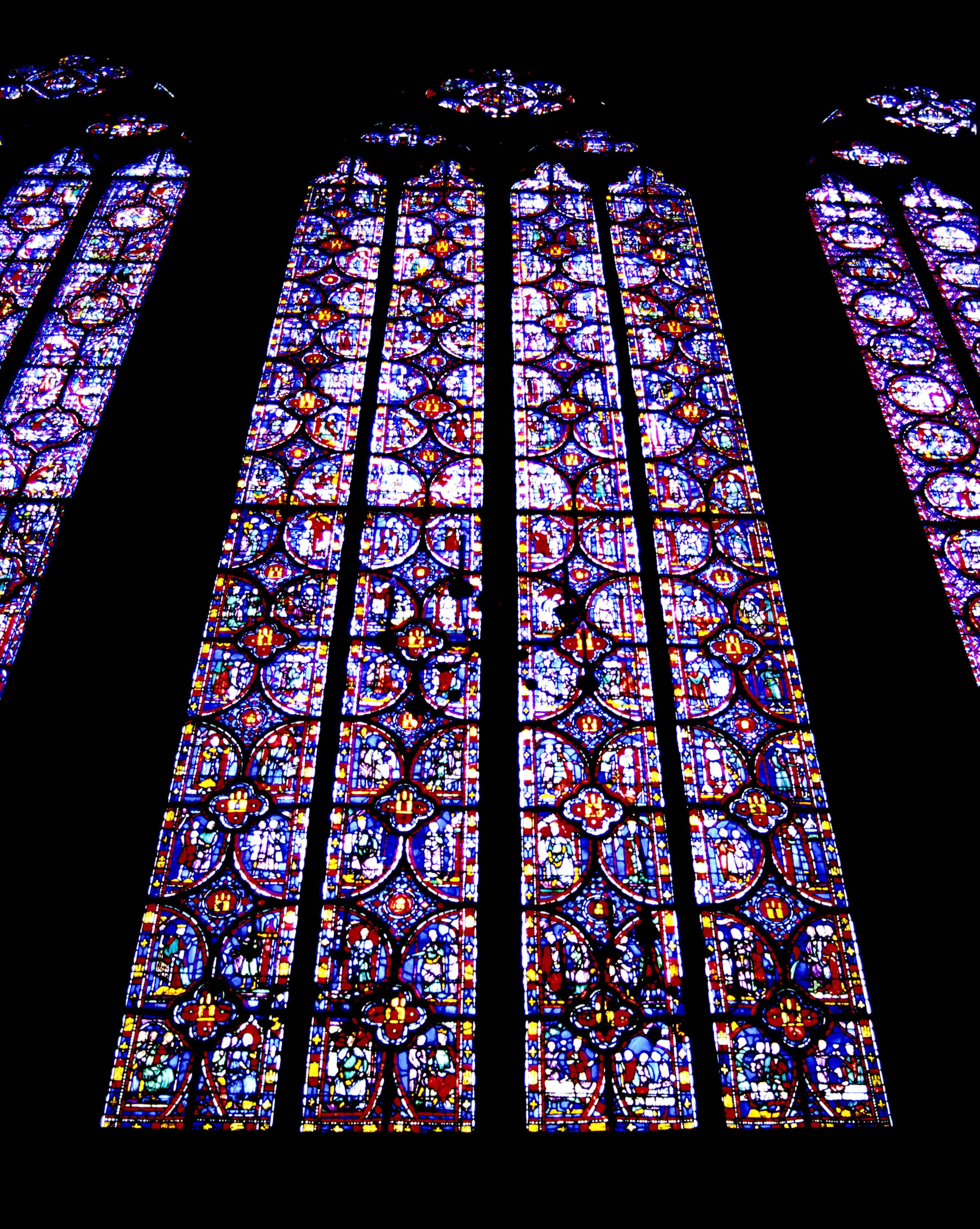
13th Century Stained Glass, Sainte-Chapelle Church, Paris, France Copyright 2000 by Blair Atherton

13th Century Stained Glass, Sainte-Chapelle Church, Paris, France Copyright 2000 by Blair Atherton

As I understand it, faith is the certainty in one’s belief in some thing or someone. Of course in the context of spirituality, faith usually refers to one’s certainty in the existence of a higher being, Universal Energy, or Creator.

When we say we have faith in a person, we are letting them know that we trust them or have trust in them—trust in their abilities, trust that they will not do anything to hurt us, trust that they will be there when we need their help or support.

It could be said that our faith in God has these same attributes and expectations. However, our faith in God is intuitive and comes from spiritual awareness, whereas our faith in a person is experiential and based on concrete knowledge of their past behaviors. Consequently, faith in a higher being is a leap that some are unwilling to take.

Another form of faith refers to trust in a religious doctrine and what are believed to be God’s promises and teachings found in religious scriptures. I believe that one should be cautious here and not let this type of faith to be blind. The scriptures and the clergy should not go unchallenged.

Scriptures from the various religions provide a lot of wonderful guidance concerning how to live a spiritual life of goodness. I think that most of us would independently agree on which passages provide such spiritual wisdom.

However, skepticism about other passages is healthy and may provide deeper insight. We would be remiss if we blindly accepted everything in the scriptures as the word of God. We were given the ability to reason and, if we apply it, we will be able to distinguish the word of God from those of men.

Related articles

Faith and Spiritual Awareness

What is Spiritual Awareness?