A Presence Palpable

Source: Wallpaperup.com

Source: Wallpaperup.com

I believe that God should be a part of our every waking moment—a presence palpable. We should honor Him and pay homage to him throughout our day. We can do this in many ways. A very important one is for goodness to permeate our every thought and action. Working and living for good encompasses selflessness, a strong desire to help others whenever we can, and when needed, self-sacrifice to serve others before ourselves.

The attribute of goodness is a state of elevated spiritual being and connection with God. It is an expression of our spirit-selves. Inherent in (and requisite for) a life of goodness is compliance with Gods commandments and mindfulness of His natural laws.

We also honor God by being present in the moments of our day so that we take notice of the beauty and wonders of nature all around us even in the most mundane setting. When we do this, we begin to see the beauty of God Himself, in that He is, and is in all things. On these occasions, our spirits soar toward the heavens, even if only for those few precious moments. We cannot help but yearn for more of such time on the wind.

In addition to these ways of daily living, we should also set aside time (preferably a day) each week for rest and relaxation to recuperate from the demands of family and work. In other words, we should always remember the Sabbath and use the time to seek greater spiritual understanding and insight. I believe this time is meant to be spent in a quiet place alone with our thoughts rather than at a place of worship with its many distractions.

This is a time where we devote ourselves to reflection and contemplation about spiritual matters and how it is that we are living our lives. It is a time for obeisance and communion with God. It should be a time when He is a presence palpable, rather than abstract.

You might like to see the following related articles:

Spirituality as a State of Being
Nature: A more Expansive Spirituality
Spiritual Lawlessness

Spiritual Wasteland Source: wallalay.com

Spiritual Wasteland
Source: wallalay.com

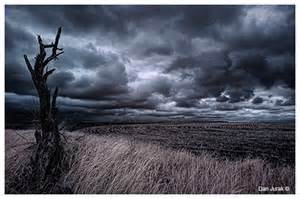
The state of much of the world today can be characterized as spiritual lawlessness. What this means in large part is that basic laws of human behavior such as honesty, integrity, morality, and ethics are being ignored—or worse—not being taught or modeled to our children. This type of lawlessness is a sure sign of a declining civilization. It is indicative of a society that has allowed itself to become lost in a spiritual wasteland.

Spiritual lawlessness is a failure to apply the basic principles that underlie living a life of goodness. It also represents a failure to be mindful of the Ten Commandments and spiritual laws such as the laws of cause and effect, and retribution and compensation. It seems that a great many people have lost touch with these time-honored guiding principles.

These natural laws have guided human behavior and interactions for millennia. Are the generations now living going to be the ones who allow the most basic of God’s laws to be ignored and perhaps eventually lost in history?

There are many comparatively trivial societal laws with which almost everyone complies. For example, we all know that a red light means stop. We stop automatically because, if we do not, we believe that we will either get a costly ticket or cause an accident that could be fatal.

Yet, it appears that many who were taught the Ten Commandments as a child have since “forgotten” them even though violating them will bring grievous harm to them spiritually. Some may willfully disregard them because compliance would deprive them of serving their own selfish desires. While others may have lost sight of them due to societal pressure to conform to widespread materialism and pursuit of self interests.

Many of us have fallen prey to sophisticated marketing campaigns and programming that loosened restrictions on the depiction of violence and sexual depravity. As a result, the psyche of people in developed countries around the world was taken down a dark path of spiritual deprivation and lawlessness.

It is my hope that those who are not happy about the state of society will take a few minutes to not only read the Ten Commandments, but reflect upon their application in the context of today’s society and the many situations in which we see violations. It is easy to quickly glance over them and assume that you “know” them. However, a more thoughtful and deeper reading would be most beneficial.

I have given a few examples below to help us begin thinking about their practical applications. As an example, let us look at the commandment “Thou shalt not steal.” This is not just about things like shop lifting or burglary. We see many kinds of theft in today’s society. For example, over charging for goods and services by setting very high profit margins, putting forth another person’s work as your own, theft of proprietary systems, processes, and recipes to name a few.

Another commandment is “Thou shalt not bear false witness against thy neighbor.” It is tempting to shirt past this one because superficially it sounds like something that applies to a courtroom. In the broadest terms, what it says to me is to not spread lies about others. We shouldn’t lie about what we may have seen or heard. We shouldn’t try to shift blame to someone else for something we did.

Thou shalt not covet things that others have is the gist of Commandment 10. I do not see any redeeming quality in being jealous of or longing for what others have. Doing so will likely lead to unhappiness and dissatisfaction. I believe we should be grateful for what we have and stay within our financial means.

I encourage everyone to do their own analysis of practical situations where each commandment applies to human behavior today. It is an exercise that may be valuable for bringing the Ten Commandments back to the forefront of our minds and automatically signal a red light when we get into situations where they apply. This will give us a chance to carefully consider how to proceed.

Spiritual lawlessness has cast a dark shadow over the world. Let us each do our part to make sure that we do not participate in it by always being mindful of God’s commandments and natural laws. He gives us so much while asking precious little in return.

You might like to see the following related articles:

What Natural or Spiritual Laws Govern Our Lives?
The Law of Cause and Effect
The Law of Retribution and Compensation

Prayers for Harmony

Copyright 2014 by Blair Atherton

Copyright 2014 by Blair Atherton

In world of divisiveness and fear, I offer the following prayers for harmony. I hope that many of you will join me in saying these prayers on a daily basis. There is so much evil in the world today and so many misguided and lost souls that need our prayers. Thank you.

Prayer for World Harmony

My dear Lord,

I pray for peace, harmony, security, equality, and freedom for all of the children of Earth.

We long for the time when goodness and light will once again prevail over the evil and darkness which have ruled the earth for far too long.

I pray that your sacred light will continually grow ever brighter and purge the earth of all shadows and darkness where evil abides.

May we come to understand that our salvation will not come through blind adherence to the doctrines and edicts of our religious faith.

But rather, simply by loving you and living a life of unselfish goodness and virtue.

May harmony between spirit, mind, and body found by the one extend to the many and
result in peace among nations and a spiritual renewal and awakening of the people of the world.

Lord hear my prayer!


The foregoing expresses aspirations for all people. The following prayer seeks harmony within us as individuals.

Prayer for Harmony

Dear God,

I strive to make myself whole, and by doing so come closer to you.

I wish to find the sacred harmony between spirit, mind, and body.

My only desire is to serve and honor you by expression of my spirit
through acts of love and compassion.

I pray that my spirit may one day become attuned with, and radiate your divine love for all things.

Amen

Author’s note

My second prayer is an excerpt from a previous article “Harmony Between Spirit, Mind, and Body.”

You might also like to see the following related articles:

A Letter to God

I Had a Vision

One Civilization Among Billions?

The Milky Way as Seen from Earth

The Milky Way as Seen from Earth

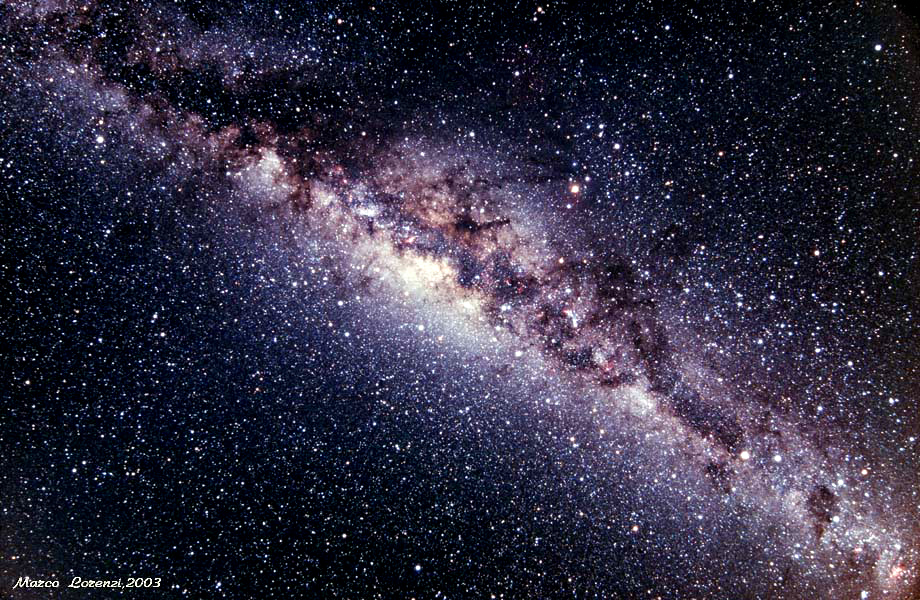
Have you ever wondered if there are other civilizations elsewhere in the Cosmos? Could we be but one civilization among billions? How likely is it that other intelligent life exists on other planets? What information is available for us to assess the likelihood that there are alien species?

The sheer immensity of the cosmos makes the notion of only one planet with a civilization seem absurd and provides strong impetus to the idea that surely there must be life elsewhere. Using a super computer, it has been estimated that there are between 300-500 billion galaxies. Astronomers estimate there are 70 billion trillion stars in the observable universe (i.e., 70,000,000,000,000,000,000,000 or 7 x 10²²). We do not know how many more may be beyond our ability to observe or detect.

These are some very big numbers that are really beyond our comprehension. Let us suppose that only one ten thousandth of a percent of all of the stars have a planet that could support some form of life. From this assumption we would estimate that there could be one thousand trillion planets in the universe (i.e., 7 followed by 16 zeros) that could support life.

Let us now suppose that only one millionth of these could have some form of intelligent life. If our assumption is correct, then we would estimate that at least one billion planets scattered about the universe could have intelligent life.

I find these numbers to be compelling concerning the likelihood that not only does life exist elsewhere in the universe, but that other civilizations do as well. If true, it is also likely that many are more advanced than us, not only technologically, but also spiritually. The earth and sun are much younger than planets and galaxies that are in the far distant universe whose light has reached us. Therefore, humankind could be on the less developed end of the spectrum.

Wherever humanity may fall in the evolutionary and spiritual hierarchy of the cosmos, there is no doubt that we have a long way to go on both developmental pathways. Spiritual evolution of a civilization is a very slow process, as is biological evolution. As I look down that long road ahead, I envision one people united in common cause for the loving care and respect for one another and for the planet that sustains them.

You might like the following related articles:

One Species Among Millions

We Exist in the Ethereal Spaces Between the Atoms

“All that is composed shall be decomposed.”


Sources of Estimates

500 Billion –A Universe of Galaxies: Some Older than Milky Way

How many stars are there in the universe?

From What Purpose Comes Meaning?

Meaning of Life

“Teacher, why am I here?” I asked.

“You are here to change the world,” the teacher replied in a matter-of-fact tone.

Taken aback I asked, “How can I change the world when I am only one among billions?”

“Ah, but you are not alone in this,” he said. “There are many like you around the world seeking to expand their spiritual awareness. There are even more who seek meaning for their lives, but are not yet spiritually aware.”

“But teacher, what is it that gives life meaning, or perhaps I should say: what is the meaning of life?” I wondered.

He smiled as a parent might to a child’s simple-minded question and replied, “There are some who seek meaning by pursuing a career. Others seek meaning through their family life. Still others seek meaning through devotion to their religion, but the answer is much more basic than these things.”

“I can see where one could get some measure of satisfaction and fulfillment from each of these,” I said.

“Yes, but there is something more fundamental that brings meaning to these and all human endeavors,” replied the teacher.

Not understanding where the teacher was going with this, I asked, “What is more basic than making one’s way in the world, love of family, and devotion to God?” When I heard his answer, I felt as if I were indeed a naive child again.

He said, “You must understand that all of the children of earth have kinship with one another. All of humanity arose from one and the same God the Father. Consequently, you are expected to give all persons you meet the same love and compassion that you would to your own parents, siblings, children, and so forth. It is helping and serving others that is most fulfilling and that gives life its true meaning.”

Trying to grasp a deeper understanding of what the teacher was saying, I declared, “So what you are saying is that love and compassion should underlie and guide all human interactions.”

“Yes, that is why you are here! That is how you will change the world! That is your life’s purpose!” he said. “This is the lesson that humanity must learn!”

You may also like the following related articles:

Spiritual Kinship

Can Love Save the World?


Disasters: Nature or Providence?

Circles of Awakening Source: gastroruas.com

Circles of Awakening
Source: gastroruas.com

Perhaps we all wonder at one time or another why major disasters occur where large numbers of people are killed or injured or there is large-scale destruction of property. Is the motive force nature or providence? Some may say they are chance events or they result from natural processes. Still others (perhaps a minority these days) may say that they are acts of God.

Of course one cannot say with certainty who is right about why these things happen. I subscribe to the expression: “Everything happens for a reason.” That said, then the big question is: What is the reason?

To say that everything happens for a reason implies that someone or something is behind events that happen in our lives, including major disasters. What value could a major disaster possibly have to humankind? To answer that question we must look at how disasters affect those directly affected and how others not involved react.

Survivors may have lost loved ones and everything they own. They must find a way to cope and start their life all over again. These are major challenges to test one’s inner strength, and for those who believe in God, one’s faith that what happened was somehow in their best interest from the perspective of spiritual development.

For those directly affected, it is a terrifying, traumatic event. They will never forget the anguish that they had to endure, but more importantly, they will never forget the kindness and compassion of those who sought to help them in the aftermath.

For some victims the help they receive is life-changing. Which is to say that they make it a point to be kind and compassionate to others as they go forward with their lives.

But the reasons why disasters happen go much further and beyond just those directly affected. I believe that large-scale major disasters such as the tsunamis in Japan and Indonesia and other events, are intended to have a transformative effect on the psyche of the children of earth.

That is, they are intended to make us reevaluate how we live, our values, and our understanding of the purpose and meaning of life. Put another way, major traumatic events provide us with an opportunity for a spiritual awakening. Sadly, not all will be ready to hear the call, but many others will.

How the psyche of individuals may be affected by disaster will vary. We have seen from news accounts that many people are moved to a deep compassion for those directly affected, and those who can, flood into the area to help any way possible.

But we are all moved with great sorrow and compassion no matter where we are. What most of us do not realize is that the outflow of compassion triggered by the event is an expression of our divine selves that is showing us who we really are; who we are intended to be; and how we should live our lives everyday with or without disasters. I believe these are the things such events are meant to teach us.

But an occasional disaster here and there apparently is not enough for these lessons to take a lasting hold in many of us. A chain of catastrophes should show us that they do not happen at random or by chance; rather, they are intended to get our attention and force us to question why we must endure such horrific events and what we can learn from them.

So, are disasters good or bad? They are both. They bring great sadness, sorrow, and suffering for the loss of life, property, and basic needs. But they also bring to many a spiritual awakening and a new perspective on life and how we are meant to live. These events are intended to remind us that the material world is temporary while the human spirit is able to transcend all earthly circumstances.

The Accidental Ascetic

Zen Garden Source: japanwallpaper.blogspot.com

Zen Garden
Source: japanwallpaper.blogspot.com

Over the last several years I have become an accidental ascetic of sorts. It was not a conscious decision or goal; rather, it was a natural progression of an evolving spirituality and lifestyle.

I acknowledge that what I am about to describe is not for everyone and I am not suggesting that anyone should try to emulate my path. Each of us will be led down our respective spiritual paths naturally.

My children have on occasion half jokingly (or half seriously) pictured me as a Buddhist monk or similar, cloistered in my home practicing qigong and tai chi and burning incense. The fact is, I do keep largely to myself and practice the above Asian energy arts daily. I also meditate twice a day and pray on and off as I move through my day as things come to mind. But these things are only a part of my life, not its totality.

Becoming a vegetarian was a key step in my accidental progression toward asceticism. Denying myself of the many foods that I once enjoyed, especially animal flesh, was cleansing, not only for my body, but also for my spirit. I surprised myself with the determination and total commitment and conviction that I brought to the challenge. It showed me an inner strength of which I was not aware.

However, my vegetarianism did not arise for the sake of self-sacrifice or asceticism. Instead, it came from a strong belief that it is wrong to raise animals in large numbers for food. I could no longer support the barbaric treatment of farmed animals.

I have been vegetarian for almost three years now and I have never wavered from my pledge. One of the collateral outcomes of my vegetarianism was a very limited menu of only a few dishes that I prepare for myself—nevertheless, much better than the tasteless porridge some monks may eat.

Another incidental outcome is that I rarely eat in restaurants because gluten-free vegetarian meals are rare or nonexistent at most eating establishments. This also makes it difficult to travel which is something else I have had to curtail.

But my so-called asceticism goes further. For example, I care little about material things. I have no desire to further enrich myself with money, things, recognition, or position. Furthermore, I am not the least bit impressed by those who seek notice for what they have or appear to have. However, I do take notice of those in need and support a number of charities throughout the year.

Part of (or perhaps as a result of) my apparent asceticism is a gradual shift away from things of the material world to the things of spirit. That is, a shift to spiritual values and seeing the world through spirit eyes. For me, this is the value and benefit of moving toward a somewhat ascetic way of life.

Although far from the true ascetic, the degree of asceticism that characterizes my life now, helps me to put things in proper perspective and to see myself within and among the sea of humanity, not detached, beyond, or above it. I see our collective and individual suffering and wish to somehow ease it through healing, service, and prayer.

The purpose of life, both in body and spirit form, is to serve others with love and compassion. Doing so is what gives our lives meaning, and what demonstrates the divinity within each and every one of us.

You might like to see the following related articles:

With Spirit Eyes I See
The Spiritual Mind
Nature: A More Expansive Spirituality

The Quintessence of Life

Radiations of Divine Love Copyright 2014 by Blair Atherton

Radiations of Divine Love
Copyright 2014 by Blair Atherton

What is the quintessence of life—that magical elixir from which all life arose and which fills it with jubilation? What is the highest, most noble element that is pervasive throughout the heavenly realms?

I believe that love is the fundamental component of all planes of existence. Love is an uncreated spiritual quality that is a healing, nurturing, fulfilling, and guiding force. It is the primordial element from which we arose and to which we shall return.

Divine love comes from without (from God and the holy spirits that serve Him) and it comes from within (from the divinity of our spirit-selves). It is all encompassing and encompassed by all.

Love is the greatest of all commandments. The purpose of our journeys through the millennia is, in large part, to come to understand that we are capable of unconditional love for all things, and once realized, to radiate that love through expression of our spirit-selves.

After many lifetimes our spirit will emerge to full expression and our love for all things truly will have no bounds or conditions. When that happens, our earth journeys may well end returning our spirit to its most basic existence—one that simply radiates divine love forever and ever.

Love transcends matter, space, and time. It is foremost among the spiritual mysteries, and a treasured gift from God that is meant to be shared with all.

From a recent posting, “On the Nature of God”

[…and God said,] “I am Love which is testimony to my existence!”

You might like to see the following related articles:

On the Nature of God
Can Love Save the World?
I Am Spirit

The Spiritual Experience of Knowing

Altered States of Consciousness

Altered States of Consciousness

What is the spiritual experience of Knowing and how does it differ from religious faith or belief? I will try to answer these questions based on my own spiritual experiences. It is an event that may be difficult to grasp through description, and for some difficult to believe without experiencing it themselves.

The spiritual type of knowing discussed here does not refer to factual knowledge, languages, or memory. Rather, as used here, it refers to an inexplicable revelation of spiritual truths of which one suddenly somehow knows with absolute certainty.

The Knowing may take place in a brief, spontaneous altered state of consciousness,  or simply by an abrupt, strong flood of thought. Either mode is sure to get one’s attention and there will be no doubt that something extraordinary has occurred. The knowledge given in this manner may be previously unknown to the recipient, or it may involve something of which the recipient had prior knowledge, but which had not taken deep root in their spiritual awareness.

A characteristic aspect of this type of knowing is that it is  unexpected, and sometimes powerful and overwhelming. It is a spiritual experience unlike anything you may have witnessed before. This is in contrast to faith and belief which are somewhat abstract, intentional commitments that one makes regarding religious and spiritual matters. That is not to say that spiritual experience cannot arise from foundations of faith, but rather faith and belief are not experiences in and of themselves.

For example, one may have faith and believe that there is a God, accepting His existence as a concept. Whereas, a Knowing would be to palpably experience His presence and qualities in an altered state of awareness.

In my book, I describe some of my spiritual experiences of Knowing. Each one was transformative and together they have changed the way I live, think, and view the world. They provided much of the impetus for this website.

The experience of Knowing is not something that one can willfully create. One must be spiritually ready to receive the knowledge it brings. A Knowing is a spontaneous event for which the factors or circumstances needed for its occurrence are largely unknown. It is my belief that if one has an open mind concerning spirituality, a genuine desire for spiritual truth, and strives for purity of heart that they may become fertile ground for the spiritual experience of Knowing.

You may like to see the following related articles:

What is Spiritual Awareness?

Faith and Spiritual Awareness


With Spirit Eyes I see

With spirit eyes I see you…

With spirit eyes I see you and I are kindred spirits.

With spirit eyes I see we are all connected parts of a whole.

With spirit eyes I see many paths leading to higher levels of spiritual awareness.

With spirit eyes I see a powerful being unaware of its spirit-self.

With spirit eyes I see your spirit body (the real you)—so beautiful and perfect.

With spirit eyes I see your potential for unconditional love for all living things.


With spirit eyes I see me…

With spirit eyes I clearly see and understand my transgressions.

With spirit eyes I see that my suffering can lead to redemption and greater awareness.

With spirit eyes I see the invisible ones always close at hand to help me.

With spirit eyes I see the beautiful light and love that radiates from them.

With spirit eyes I see that my purpose is to serve.

With spirit eyes I see that this is what gives life meaning.

*******

Each of us has the potential to see the world through our spirit eyes. It is a choice we can make, but one that must come from purity of intent. That is, a desire to not only see as spirit, but to also live life according to what spirit shows us.

Copyright 2016 by Blair Atherton